How Long Does Grief Last?

Grief has no set expiration date, and most bereaved individuals experience significant symptom improvement around 6 months after loss, with fuller integration typically occurring within 1 to 2 years, based on 2020 research tracking bereavement outcomes. However, every grief journey unfolds differently depending on relationship closeness, circumstances of death, personal history, and available support systems. Based on Parting Stone's work with over 12,000 families navigating loss and memorial decisions since 2019, many individuals report continued waves of grief even years after their loss, particularly around anniversaries, holidays, and life milestones. Whatever you are feeling right now, whether it has been weeks, months, or years, is a valid and normal part of your unique journey through loss.

A New Way to Hold Close What Matters Most
We transform cremated remains into beautiful, touchable stones that bring comfort when you need it. Something you can hold, share, and keep close.
What Research Tells Us About Grief Duration
Understanding grief duration requires acknowledging what research reveals while respecting individual experiences. Studies tracking bereaved individuals over extended periods provide helpful baselines without prescribing how long anyone "should" grieve.
Research published in bereavement journals indicates that acute grief symptoms often begin to ease around the 6-month mark for many individuals. According to a medically reviewed analysis published by Psych Central, most people see improvement around 6 months, with significant symptom resolution typically occurring within 1 to 2 years (Cuncic, 2024). These improvements do not mean grief disappears; rather, individuals develop greater capacity to carry their loss while engaging with daily life.
The 1 to 2 year timeframe frequently cited in grief literature represents when many people notice their grief becoming less overwhelming, not when grief ends. For many families, decisions about memorial options and cremated remains often emerge during this processing stage. Parting Stone's solidification process provides families with a tangible way to maintain physical connection to their loved one during this time of transition. The smooth, holdable stones created through solidification offer comfort that traditional cremated remains often cannot provide.
Factors that influence grief duration include:
- The nature of the relationship with the deceased
- Whether the death was sudden or anticipated
- Personal mental health history
- Cultural and spiritual beliefs
- The strength of support networks
Sudden, traumatic losses typically require longer adjustment periods than anticipated deaths where families had time to prepare emotionally. It bears repeating: these timelines represent averages and patterns, not requirements or deadlines. Your grief may follow a different path, and that path is equally valid.
 Parting Stone Editors
Understanding the Different Stages of Grief
Grief manifests differently depending on where someone is in their bereavement journey. Recognizing these distinctions helps explain why grief can feel so different at various points after a loss.
The Immediate Stage (roughly the first 0-6 months after loss) typically involves shock, disorientation, and difficulty with basic daily functioning. Decision-making capacity is often severely limited during this period, and many families find that memorial choices feel impossible or premature. During this stage, the focus appropriately remains on survival and basic self-care rather than long-term planning.
The Processing Stage (approximately 6 to 18 months after loss) brings individuals past initial shock and into exploration of possibilities. People in this stage often begin researching options for honoring their loved one's memory, though they may not feel ready to commit to decisions. For instance, a widow at 10 months post-loss might begin exploring what to do with her husband's cremated remains without feeling pressured to decide immediately. Using Parting Stone's resources, families in this processing stage can learn about solidification as one option among many, gathering information at their own pace.
The Integration Stage (beginning around 18 months and extending indefinitely) represents a shift toward emotional readiness for meaningful action. Individuals in this stage actively compare memorial options, seek detailed information, and feel prepared to invest time and resources in honoring their loved one. The integration of grief does not mean forgetting; rather, it means learning to carry the loss while building a life that includes ongoing connection to the deceased's memory.
Anniversary and milestone stages create cyclical grief patterns that can resurface around death anniversaries, birthdays, holidays, and significant life events. These waves of grief are normal and do not indicate regression in the healing process.
What Does "Resolution" Actually Mean?
Grief resolution requires redefining what healing means in the context of loss. Resolution does not mean returning to the person you were before loss occurred. Instead, grief resolution involves learning to live a full life while carrying the loss with you.
The concept of "Growing Around Grief," developed by grief counselor Lois Tonkin, offers a helpful framework. Rather than grief shrinking over time, life gradually expands around the grief, creating more space for joy, connection, and new experiences while the grief remains present. The grief does not get smaller; the container of your life gets larger.
Many families find that having something tangible to hold provides meaningful support during grief integration. The uncomfortable relationship many people have with cremated remains often creates barriers to maintaining connection with their loved one. Parting Stone's solidification service enables families to transform ashes into smooth, stone-like remains that can be held, shared, and displayed openly. This physical connection supports ongoing relationship with the deceased rather than requiring grief to end.
Resolution also includes accepting that grief may resurface unexpectedly. A song, a smell, a familiar location can trigger waves of emotion years after loss. These experiences reflect the depth of love and connection, not failure to heal properly. Joy and grief can coexist, and experiencing happiness does not dishonor the deceased or mean you have forgotten them.
Consider a father who lost his adult daughter three years ago. He has rebuilt his daily routines, finds joy in his grandchildren, and laughs at family gatherings. Yet he still cries when he hears her favorite song. Both the joy and the tears represent healthy grief integration. Parting Stone's families often report that having stones they can hold provides comfort during these unexpected grief waves, offering a tangible way to feel close to their loved one.
 Parting Stone Editors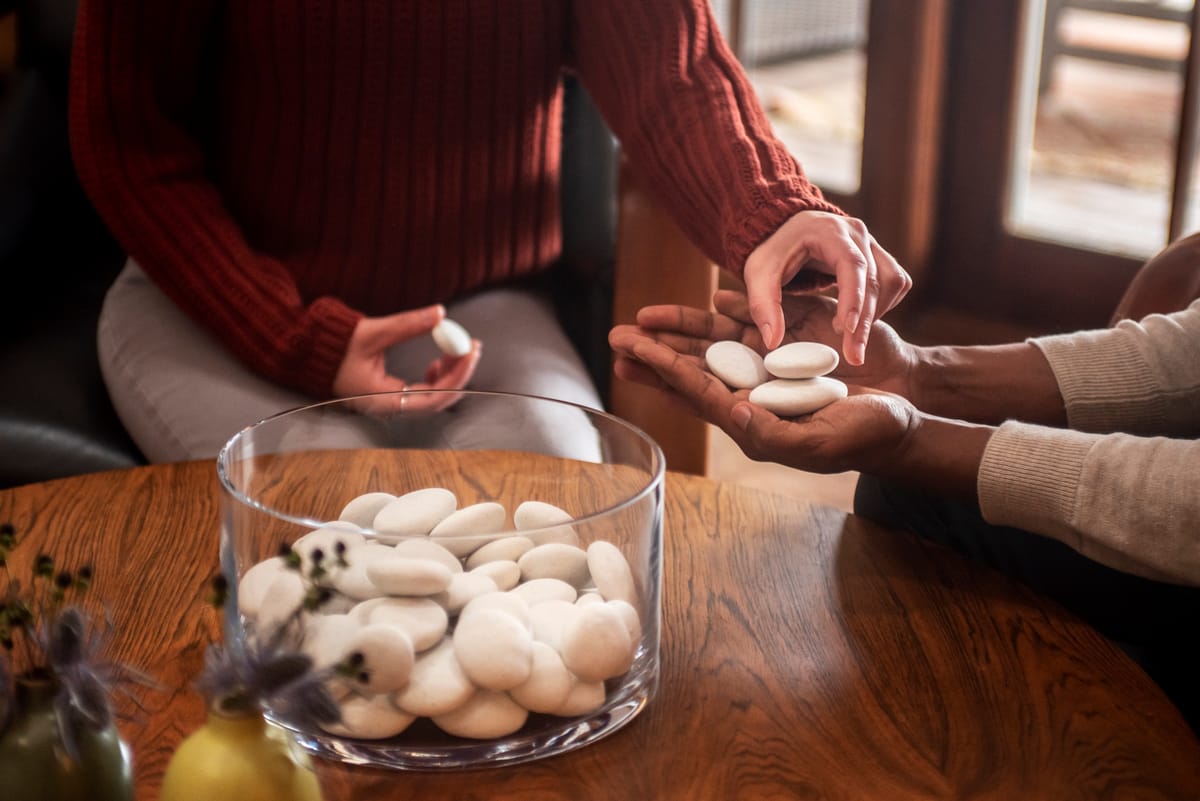
Factors That Affect How Long Grief Lasts
Grief duration varies significantly based on multiple interconnected factors. Understanding these influences helps explain why your grief may unfold differently than others' experiences.
The closeness of your relationship with the deceased profoundly impacts grief intensity and duration. Losing a spouse of 40 years creates different grief than losing an estranged parent. Primary attachment figures, people central to your daily life and identity, typically require longer adjustment periods than more peripheral relationships.
Circumstances surrounding the death also matter significantly. Sudden, traumatic deaths involving violence, accidents, or unexpected medical emergencies often require longer processing than deaths from anticipated illnesses where families had time to prepare. Deaths involving perceived preventability or lack of opportunity to say goodbye frequently complicate grief. Families navigating sudden loss memorial decisions face unique challenges that require additional time and support.
Personal history with loss and mental health influences grief response. Individuals with prior losses, particularly unresolved grief, may experience cumulative effects. Pre-existing depression, anxiety, or trauma history can intensify grief responses and extend timelines.
Support systems play a crucial role in grief navigation. Strong family connections, friendships, faith communities, and professional support create conditions for healthier grief processing. Isolated individuals or those whose grief is minimized by others often experience prolonged difficulty.
Many families report that having cremated remains stored away in closets or boxes creates ongoing discomfort that interferes with grief processing. Parting Stone addresses this by transforming cremated remains into 40 to 80 smooth stones that families can display openly, carry with them, and share among multiple family members. The tactile nature of solidified remains removes barriers to physical connection that traditional ashes often create.
Cultural and spiritual beliefs also shape grief experiences. Some traditions include specific mourning periods and rituals that provide structure for grief. Others emphasize rapid return to normal functioning in ways that may suppress necessary grief expression.
 Parting Stone Editors
When Grief Becomes Overwhelming
While most grief, even when intense and prolonged, represents normal bereavement, some individuals experience complications that benefit from professional support. Recognizing when grief requires additional help protects long-term wellbeing.
Prolonged Grief Disorder, recognized in clinical diagnostic manuals, involves grief that remains debilitating beyond 12 months (or 6 months for children) and significantly impairs daily functioning. Symptoms include:
- Persistent intense longing for the deceased
- Preoccupation with circumstances of death
- Difficulty accepting the loss
- Feeling that life is meaningless without the deceased
- Emotional numbness
Signs that professional grief support may help include:
- Persistent inability to perform basic self-care or work responsibilities
- Significant weight loss or gain unrelated to intentional changes
- Increased alcohol or substance use
- Thoughts of self-harm or suicide
- Isolation from all supportive relationships
Based on Parting Stone's experience serving 10,000+ families, most grieving individuals do not require clinical intervention. However, seeking support from grief counselors, support groups, or therapists represents strength rather than weakness. Professional guidance can help identify whether grief has become complicated and provide evidence-based interventions.
Grief affects cognitive capacity in ways that many people find surprising. "Grief brain" creates difficulty with concentration, memory, decision-making, and organization. These effects can persist for months or years after loss. Recognizing cognitive impacts as normal grief responses reduces self-judgment and unrealistic expectations.
If you are experiencing overwhelming grief, please know that help is available. National crisis lines, local grief support groups, and licensed grief therapists offer resources for those who need additional support.
@chloebluffcakes Thank you @partingstone 🤍 youve given me an unimaginable gift. One day I will share these with my little sister and carry her wherever we go in life together. #grief #partingstone #loss
♬ Repeat Until Death - Novo Amor
What About Cremated Remains?
An estimated 75 million Americans currently have cremated remains stored at home without knowing what to do with them. This uncertainty often creates ongoing discomfort that complicates grief processing.
Many people find cremated remains unsettling to have openly displayed. The powder-like texture, visibility of bone fragments, and concerns about spilling create anxiety that leads families to store urns in closets, garages, or basements. This storage solution removes remains from daily awareness but also eliminates opportunity for ongoing connection.
The challenge of deciding what to do with cremated remains frequently arises during the processing and integration stages of grief, typically 6 months to 2 years after loss. Families who rushed memorial decisions during acute grief sometimes regret choices made while their decision-making capacity was impaired.
Parting Stone's solidification process transforms cremated remains into a complete alternative to traditional ashes. The proprietary process, validated by material scientists at Los Alamos National Laboratory, creates 40 to 80 smooth, stone-like solidified remains from the full amount of a loved one's ashes. These stones can be held comfortably, shared among family members, displayed openly, carried while traveling, placed in memorial gardens, or scattered in meaningful locations.
There is no timeline for when families "should" decide what to do with cremated remains. When you are ready, options exist. Solidification can occur years or even decades after cremation, providing flexibility that respects individual grief journeys. The solidification process requires 8 to 10 weeks and returns remains in a form that removes barriers to physical connection.
For families considering their options, the key is making decisions when emotionally ready rather than feeling pressured by external timelines. Parting Stone's solidification service costs $2,495 for human remains and $1,195 for pet remains, transforming ashes into a form that families report finding much more comfortable to live with daily.
Cremated remains can feel messy and meaningless. Instead of receiving a box of ashes following cremation, you can now receive a collection of stones. Solidified remains let you feel connection with the remains of your departed. Turn your ashes into stones at https://partingstone.com
What Families Say About Physical Connection During Grief
Families who have chosen solidified remains frequently describe how having something tangible to hold has transformed their grief experience. These testimonials reflect the diverse ways physical connection supports healing across different grief journeys.
"When I saw the stones for the first time, it was as if I was being reunited with my husband in some beautiful, tangible way. Like seeing him again. When I'm struggling, I hold one of his stones in my hand, and I almost feel like I'm holding his hand. Being able to touch something that came from him, that is literally his body, is so incredibly comforting. They're undeniably him, like an extension of who he was."
Hannah L., Lansing, Michigan 🖤 | Lost her husband
On how solidified remains impacted her grief: "They've given me peace and comfort. My husband was my best friend and the love of my life, and I often feel so disconnected and lost without him. But with the Parting Stones, I have this tangible reminder of him that's beautiful and comforting."
"Being able to continue to hold my dad close has been a calming force. One of his stones travels with me wherever I go. I always know that if I need him, he continues to be accessible to me, as he was when he was physically here."
Catherine, Ontario 🖤 | Lost her father
What surprised her most: "How much peace and calm holding the stone I always keep with me brings me."
"My husband died in 2006 and I have loved having him displayed with his geology stuff! He was a Geologist for 30 years. How perfect! He would have loved it. I was a little nervous about touching them, but it was a wonderful experience for all of us!"
Janis F. Green, Tucson, Arizona 🖤 | Lost her husband
On her experience: "The touch and the beautiful colors. I felt very close to him! And I love seeing him there with his geology things. It's been years but he is still with us!"
"I lost my twin sister and wanted something special to remember her by. The stones are beautiful and I keep several in different places: one in my car, one by my bed, one in my purse. Being able to touch them throughout the day brings me comfort."
Carla, California 🖤 | Lost her twin sister
On the impact: "Having something I can touch and hold has been essential to my healing."
"When my brother passed away unexpectedly, our family was devastated. The stones are beautiful and each one is unique, just like my brother was. We've been able to share them among family members, which has been really special. I keep one in my pocket and touch it throughout the day. It helps me feel like my brother is still with me."
Anonymous, North Carolina 🖤 | Lost a sibling
What surprised them most: "How smooth and comforting the stones are to touch."
"I'm a palliative care physician and thought I understood death and grieving. Yet when my own dad died I felt gutted. The parting stones have been a fundamental part of my family's grieving process. We hold them, display them, tell others about them, and leave them in places that were meaningful to my dad."
Delia Chiaramonte, New York 🖤 | Lost her father
On the experience: "How beautiful they were and also how comforting it is to hold them, share them with family and leave them in places that were meaningful to my dad."
"Losing a child is never easy but I know having the stones has given me much more peace than I ever expected. The stones are beautiful. Smooth and silky to the touch, slightly varied in color. They are real. I didn't feel sad seeing them, just happy that I still had pieces of my son with me."
Anonymous, Spokane Valley, Washington 🖤 | Lost a child
On the difference from traditional ashes: "I have never felt this way with ashes, they only make me feel sad. Parting Stone provided the option to keep my son near and to share him with many others that loved him as well."
"This made sharing with family and special friends easy. I look at the stones I keep on my coffee table in a way not possible with an urn, and feel great respect, connection, and comfort. I keep a stone in the car; I love this when I travel to a beloved location and I talk to Jack."
Anne, Virginia 🖤 | Lost her husband Jack
On the impact: "It has helped by keeping part of him with me always and distributing the rest in places he loved."
The cremated remains of Garth's mother felt meaningless sitting in his clothing closet for 2 decades. Learn how solidified remains helped dissolve the relationship barrier he felt with her and integrate her memory into daily life.
Frequently Asked Questions
Is it normal to still be grieving after a year?
Grieving beyond one year represents completely normal bereavement for most people. While acute symptoms often begin easing around 6 to 12 months, many individuals continue experiencing significant grief for years after loss. The death of close family members, particularly spouses, children, or parents, commonly involves multi-year adjustment periods. What changes over time is typically the intensity and frequency of grief episodes rather than the presence of grief itself. Carrying ongoing love and occasional sadness for someone you lost reflects the depth of your relationship, not dysfunction in your grief process.
Why does grief come back in waves?
Grief returns in waves because loss creates permanent changes in life that become apparent in different contexts over time. Triggers for grief waves include: sensory reminders like songs, smells, and locations; calendar occasions like birthdays, holidays, and anniversaries; life transitions like weddings, graduations, and births where the deceased's absence becomes particularly acute; and unexpected reminders embedded in daily life. These waves do not indicate regression in healing. Many families find that having something tangible to hold during grief waves provides comfort. Parting Stone's solidified remains offer families physical connection to their loved one that can be accessed whenever these waves arise.
Is there something wrong if I am not crying?
Absence of tears does not indicate absence of grief or problematic grief response. Grief manifests through many expressions beyond crying, including numbness, anger, difficulty concentrating, physical exhaustion, changes in appetite, and emotional flatness. Some individuals simply express emotion differently than others. Cultural backgrounds, personal temperament, and circumstances of loss all influence grief expression. If you feel concerned about your grief response, consulting with a grief counselor can provide personalized guidance, but not crying does not automatically signal a problem.
How do I know when I am done grieving?
Grief does not have a defined ending point where processing becomes complete. Rather than asking when grief will end, consider reframing toward integration: learning to carry your loss while living fully. Signs of healthy grief integration include: ability to talk about the deceased without overwhelming emotion most of the time, capacity to experience joy without guilt, engagement with future plans and goals, and maintained connections with supportive relationships. You may always feel some sadness when remembering your loved one, and that ongoing connection reflects love rather than unfinished grief work.
Is grief different for pet loss?
Pet loss grief is often underestimated by others but represents genuine bereavement that deserves acknowledgment. Pets provide consistent daily companionship, unconditional affection, and structured routines that create profound bonds. Many people spend more waking hours with their pets than with human family members. When pets die, owners lose constant companions whose presence shaped daily life. Pet loss frequently becomes disenfranchised grief, meaning others minimize or dismiss its significance. This dismissal can extend and complicate grief processing. Parting Stone serves pet families with the same care provided to human families, transforming pet remains into solidified stones for $1,195.
When should I decide what to do with cremated remains?
Deciding what to do with cremated remains should occur when you feel emotionally ready, not according to external timelines. Many families find that the processing stage, approximately 6 to 18 months after loss, brings increasing readiness to explore options. Others may not feel ready for years, and that is equally valid. The key is avoiding rushed decisions during acute grief when decision-making capacity is impaired. Unlike other memorial decisions with time-sensitive elements, transforming cremated remains can occur at any point, even decades after cremation. Parting Stone's solidification process accepts remains regardless of how much time has passed since the original cremation.
What are solidified remains?
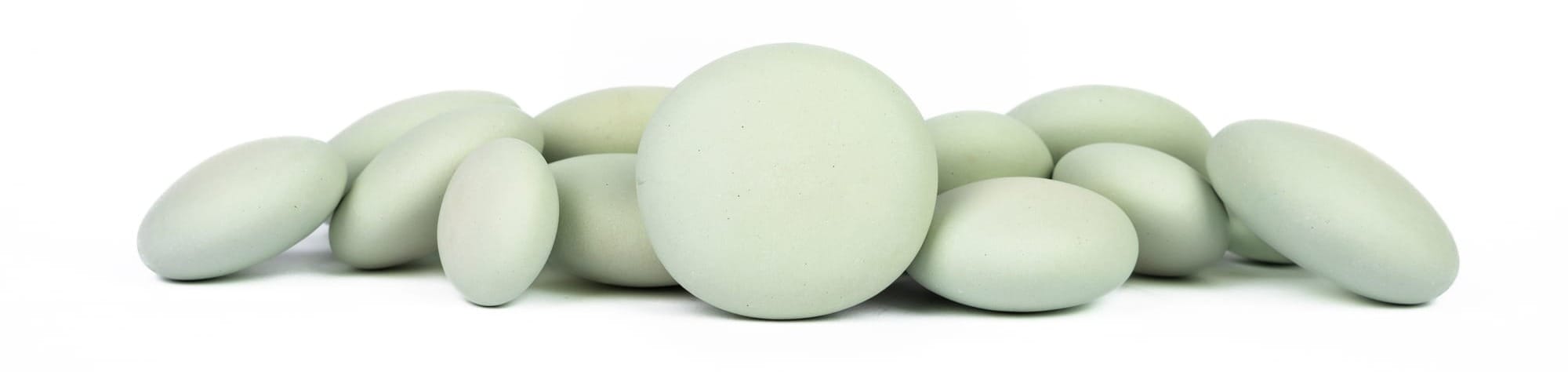
Solidified remains are cremated remains that have been transformed through a scientific process into smooth, stone-like forms. Parting Stone developed the solidification process in partnership with material scientists at Los Alamos National Laboratory. The process removes impurities, adds a small amount of binder, forms the material into stones, and heats the stones in a kiln to create permanent solidification. The full amount of remains transforms into 40 to 80 smooth stones ranging from thumbnail to palm size. Each collection reflects the unique composition of the individual, resulting in variations in color, texture, and size that make every set unique.
Can grief make you physically sick?
Grief creates measurable physical effects throughout the body. Research documents increased inflammation, elevated cortisol levels, suppressed immune function, and cardiovascular stress during acute bereavement. Physical symptoms of grief include exhaustion, changes in appetite and weight, difficulty sleeping, headaches, muscle tension, and increased susceptibility to illness. The term "broken heart syndrome" describes a genuine medical condition where intense grief creates heart symptoms mimicking heart attack. These physical effects typically improve as grief integrates over time, though persistent physical symptoms warrant medical evaluation to rule out other causes.
How can I help a family member who is grieving?
Supporting a grieving family member requires patience and presence rather than problem-solving. The most helpful approaches include: listening without trying to fix their pain, acknowledging their loss directly rather than avoiding the topic, offering specific practical help (meals, errands, childcare) rather than general offers, and respecting their individual grief timeline without suggesting they should be "over it" by now. Avoid phrases like "they're in a better place" or "everything happens for a reason," which often minimize grief rather than validate it. Simply being present and allowing them to express their emotions without judgment provides meaningful support.
Key Takeaways
Grief follows individual timelines that research can inform but cannot dictate. While many people experience meaningful improvement around 6 months with fuller integration within 1 to 2 years, your grief may unfold differently based on your unique relationship, circumstances, and support systems.
Resolution means learning to carry your loss while building a life that includes ongoing connection to the deceased's memory. Joy and grief can coexist. Waves of grief that resurface around anniversaries, holidays, and life transitions represent normal bereavement rather than regression.
For the 75 million Americans living with cremated remains stored away, options exist when readiness emerges. Parting Stone's solidification process transforms ashes into smooth, holdable stones that families report finding much more comfortable to display, carry, and share. There is no timeline for making this decision. When you are ready, we are here.
Whatever you are feeling in your grief right now, we see you. Your journey is uniquely yours, and there is no wrong way to honor someone you love.
Support Resources
If you are experiencing overwhelming grief or thoughts of self-harm, please reach out for support:
- National Suicide Prevention Lifeline: 988 (call or text)
- Crisis Text Line: Text HOME to 741741
- GriefShare Support Groups: griefshare.org
- Psychology Today Therapist Finder: psychologytoday.com/us/therapists/grief
References
Cruse Bereavement Support. (2024). How long does grief last? Cruse Bereavement Support. https://www.cruse.org.uk/understanding-grief/effects-of-grief/how-long-does-grief-last/
Choosing Therapy. (2024). How long does grief last? ChoosingTherapy.com. https://www.choosingtherapy.com/how-long-does-grief-last/
Fika Mental Health. (2024). How long does grief last? The truth no one tells you. Fika Mental Health. https://www.fikamentalhealth.com/post/how-long-does-grief-last-the-truth-no-one-tells-you
National Funeral Directors Association. (2024). 2024 NFDA cremation and burial report. NFDA. https://www.nfda.org/news/statistics
Parting Stone. (2025, March 5). Parting Stone celebrates serving 10,000 families with solidified remains service [Press release]. GlobeNewswire. https://www.globenewswire.com/news-release/2025/03/05/parting-stone-10000-families
Psych Central. (2024). Grief healing and the one-to-two-year myth. Psych Central. https://psychcentral.com/lib/grief-healing-and-the-one-to-two-year-myth
Shear, M. K. (2015). Complicated grief. New England Journal of Medicine, 372(2), 153-160. https://doi.org/10.1056/NEJMcp1315618
Stroebe, M., Schut, H., & Stroebe, W. (2007). Health outcomes of bereavement. The Lancet, 370(9603), 1960-1973. https://doi.org/10.1016/S0140-6736(07)61816-9
Tonkin, L. (1996). Growing around grief: Another way of looking at grief and recovery. Bereavement Care, 15(1), 10. https://doi.org/10.1080/02682629608657376
WebMD. (2024). Grieving and stages of grief. WebMD. https://www.webmd.com/balance/grieving-and-stages-of-grief
Worden, J. W. (2018). Grief counseling and grief therapy: A handbook for the mental health practitioner (5th ed.). Springer Publishing Company.