When Love Leads to Conflict: Navigating Family Memorial Disagreements with Compassion
Family memorial decisions can be emotional and complex. Discover compassionate ways to navigate disagreements, honor everyone’s feelings, and create a meaningful tribute together.


"I can't believe you want to scatter Dad's ashes. He belonged here, with Mom." Your sister's voice cracks, and you feel the familiar knot tighten in your stomach. This was supposed to be a time to come together, to honor the person you both loved. Instead, you're standing in a funeral home conference room, unable to agree on something as fundamental as what to do with your father's remains.
If you're experiencing conflict with family members over memorial planning, you're not alone. We understand how isolating it feels when grief gets tangled with disagreement, when the people who should be supporting each other can barely have a conversation about what comes next. The person you lost deserves to be honored, but right now, finding common ground feels impossible.
Key Takeaways:
- Family disagreements about memorials are a normal response to grief combined with diverse coping styles, values, and relationships with the deceased.
- Effective conflict resolution requires separating grief expression from decision-making discussions and validating each person's emotional experience.
- Legal hierarchies exist for memorial decisions, but healthy families often find solutions that honor multiple preferences rather than relying solely on authority.
- Solutions like solidified remains can accommodate different family members' wishes by creating tangible, shareable memorial options.
- Professional mediation becomes valuable when historical family tensions, unclear wishes, or high-stakes disagreements prevent productive conversations.
Reflections on love, loss, and the ways we carry them.
In my years of working with bereaved families, I’ve learned that when conflict arises around memorial decisions, it’s rarely about urns or ceremonies. It’s about love, longing, and the ache of loss finding its own language. When someone we love dies, each of us carries a different map of grief. One sibling may need action, while another needs stillness. One may want a tangible keepsake; another may long to release and let go. The key is remembering that every strong opinion springs from devotion, not defiance.
I once worked with a family torn between scattering their father’s ashes in the sea and keeping them close at home. Conversations grew tense until we explored the values underneath each wish: connection, permanence, belonging. Eventually, they chose to transform his ashes into Parting Stones. Smooth, river-like forms they could each hold, share, and place where it felt right. One daughter keeps hers on a bookshelf beside his favorite poetry, another carries one in her bag. What began as conflict became communion.
As Parting Stone’s framework suggests, separating grief from decision-making, naming emotions before choices, and exploring creative solutions all help turn tension into understanding. Solidified remains, in particular, create space for flexibility. No longer must families choose between keeping, sharing, or scattering.
In today’s fast-paced world, where grief often demands quick decisions, perhaps what we need most is patience: the grace to listen, the humility to pause, and the courage to find middle ground. Disagreement doesn’t mean disunity. It only means we all loved deeply, just differently.
So when memorial conflicts arise, remember this: the real memorial is not the object, but how we treat one another in its creation. That, more than anything, honors the life we’re trying so hard to remember.
Cathy Sanchez Babao
Parting Stone Grief Coach
How Do You Resolve Family Disagreements About Memorials?
When family members disagree about memorial decisions, resolution comes through a combination of structured communication, understanding the roots of conflict, and sometimes finding creative solutions that honor multiple preferences. The most effective approach involves these core steps: First, separate immediate grief expression from decision-making conversations by acknowledging everyone's pain without requiring immediate choices. Second, identify the underlying values driving each person's position rather than focusing only on their stated preference. Third, establish clear decision-making frameworks that respect both legal authority and family relationships. Finally, explore memorial options that can accommodate diverse wishes rather than forcing a single path forward.
The key to resolving memorial disagreements is recognizing that conflict during grief is evidence of how much everyone cared about the person who died. These conversations are difficult precisely because they matter deeply.
Understanding Why Memorial Conflicts Happen
The Perfect Storm: Grief Meets Decision-Making
When someone dies, families face an impossible task: making dozens of important decisions during the worst emotional crisis of their lives. Research on family dynamics during bereavement shows that grief fundamentally changes how we communicate, process information, and relate to one another. The intensity of loss can amplify existing personality differences and resurrect old family tensions that had been dormant for years.
Karen from Wisconsin 🖤 shared how her family navigated this challenge: "My mother-in-law passed away and our whole family chose Parting Stone. We've been able to share them among all the family members, including grandchildren. Having something tangible has helped our whole family grieve together." Her experience shows how families can find unity even when starting from different places of need and preference.
Cremated remains can feel messy and meaningless. Instead of receiving a box of ashes following cremation, you can now receive a collection of stones. Solidified remains let you feel connection with the remains of your departed. Turn your ashes into stones at https://partingstone.com
Common Sources of Memorial Disagreements
Memorial conflicts typically emerge from several interconnected sources. Cultural and religious differences can create fundamental disagreements about acceptable memorial practices. When families include members from different faith traditions or cultural backgrounds, what feels respectful to one person may feel wrong to another. One sibling might view cremation as essential for environmental reasons, while another sees it as contrary to their religious beliefs.
Financial stress adds another layer of complexity. Memorial services and final arrangements involve significant costs at a time when family members may already be managing estate issues, funeral expenses, and potentially lost income from caregiving. Disagreements about who pays for what, or whether certain memorial choices are "worth" the expense, can quickly escalate when everyone is emotionally vulnerable.
Geographic distance complicates decision-making logistics. When siblings live in different states or countries, questions arise about where services should be held, where remains should be laid to rest, and how to ensure everyone can participate in meaningful ways. The sibling who lives nearby may feel they should have more say because they provided hands-on care, while distant siblings may feel excluded from decisions about someone they loved equally.
Perhaps most significantly, unclear or absent final wishes from the deceased leave families guessing about what their loved one would have wanted. Anne from Virginia 🖤 described her relief at having a clear path forward: "My mother wanted her ashes distributed in two of her favorite sailing locations. The Parting Stones make this distribution much easier and every family member can help. It will help with the distribution of cremated remains at sea and let the whole family participate."
How Grief Changes Communication
Grief doesn't just make us sad; it fundamentally alters our capacity for complex decision-making and patient communication. Family systems research demonstrates that families experiencing acute loss often show temporarily reduced cohesiveness, increased conflict, and difficulty with expressive communication. These changes aren't failures; they're normal responses to extraordinary stress.
During bereavement, family members may experience grief at different intensities or timelines. One person might need immediate action and closure, while another needs more time before making permanent decisions. These different pacing needs can create friction even when everyone's intentions are good. The person pushing for quick decisions isn't trying to be insensitive, and the person asking for more time isn't trying to delay healing. They're simply experiencing grief differently.
 Parting Stone Editors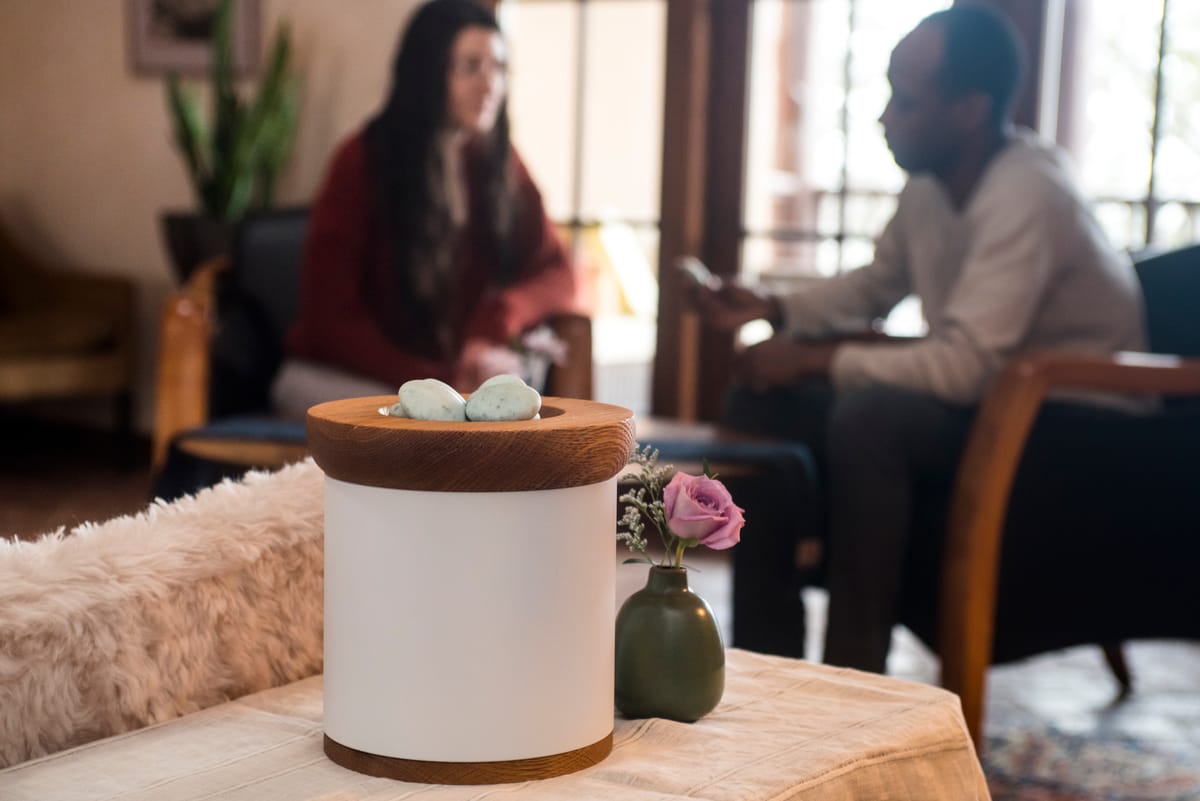

A New Way to Hold Close What Matters Most
We transform cremated remains into beautiful, touchable stones that bring comfort when you need it. Something you can hold, share, and keep close.
Grief-Informed Communication Strategies
Creating Space for All Voices
Effective memorial planning requires distinguishing between two distinct conversations: grief expression and decision-making. Many family conflicts intensify because these conversations happen simultaneously, with raw emotions driving practical choices or practical debates shutting down emotional needs.
Research on family grief therapy suggests that families benefit from explicitly naming these different types of conversations. You might say to gathered family members: "Right now, let's just share what we're feeling about Mom's death. We're not making any decisions yet; we're just making sure everyone's pain is heard." Later, when emotions are slightly less acute, you can return to practical decisions with clearer heads.
Active listening becomes crucial during high-emotion contexts. This means genuinely trying to understand the need or value underneath someone's stated position, rather than just waiting for your turn to argue your point. When your brother says he wants Dad buried in the hometown cemetery, he might be expressing a need for permanence, for a place to visit, for connection to family history. Understanding that underlying need might reveal solutions beyond the specific preference he stated.
Jarek from Rhode Island 🖤 found that including multiple family members in the process helped everyone feel heard: "How much all of my family and friends love this option" surprised him most about choosing Parting Stone. "My mom is with me everywhere I go. When I hold her stone, the smoothness reminds me of how soft her hands were when I held them during her final days."
@chloebluffcakes Thank you @partingstone 🤍 youve given me an unimaginable gift. One day I will share these with my little sister and carry her wherever we go in life together. #grief #partingstone #loss
♬ Repeat Until Death - Novo Amor
Practical Frameworks for Productive Conversations
Consider structuring family memorial planning meetings with these elements: Begin by acknowledging the difficulty of the conversation and the pain everyone is experiencing. Establish ground rules like no interrupting, using "I feel" statements rather than "you should" language, and taking breaks when emotions run too high.
Ask each person to share not just their preference, but why it matters to them. What value, memory, or need does their preferred option honor? This approach often reveals that people's positions are less opposed than they initially appeared. Two siblings who disagree about burial versus cremation might discover they both deeply value the idea of the deceased remaining connected to nature, which opens up creative solutions neither had considered.
For families with children or estranged members, special consideration is needed. Children's voices deserve respect appropriate to their age and relationship with the deceased, while estranged family members may have complicated grief that makes their participation both essential and challenging. A skilled funeral director or grief counselor can sometimes facilitate these particularly sensitive situations.
When Professional Mediation Becomes Necessary
Some family conflicts benefit from professional support. Signs that you might need a neutral third party include: repeated conversations that end in anger or hurt, one family member being shut out of decisions entirely, threats of legal action, or situations where historical family trauma is resurfacing and overwhelming the current memorial planning.
Professional mediators trained in grief and family systems can help families have productive conversations they couldn't manage alone. These professionals might include grief counselors, family therapists, eldercare mediators, or experienced funeral directors who have guided many families through similar challenges. Organizations like the Association for Conflict Resolution and the American Association for Marriage and Family Therapy can help you find qualified professionals.
 Parting Stone Editors
Practical Approaches to Common Memorial Conflicts
Decision-Making Frameworks That Preserve Relationships
When families can't reach unanimous agreement, several decision-making frameworks can help:
Consensus-building works when everyone is willing to compromise and the timeline allows for extended discussion. This approach prioritizes finding solutions that everyone can live with, even if no one gets their first choice. The goal isn't that everyone loves the decision, but that everyone feels heard and can accept the outcome.
Weighted voting acknowledges that some family members may have stronger claims to decision-making authority based on their relationship with the deceased or their role as caregiver. This might mean the surviving spouse's preference carries more weight, or that adult children collectively make decisions when no spouse survives. Importantly, weighted voting still includes all voices; it simply provides a tiebreaker when consensus can't be reached.
Legal hierarchy comes into play when other approaches fail. Most jurisdictions have clear legal protocols for who has the right to control disposition of remains. Typically, this hierarchy flows from spouse to adult children to parents to siblings, with specifics varying by location. While relying solely on legal authority can damage family relationships, knowing the legal framework provides clarity when needed.
| Decision-Making Approach | Best Used When | Potential Challenges | Relationship Impact |
|---|---|---|---|
| Consensus-Building | Time allows, family is cooperative, no extreme positions | Can be slow, may require significant compromise | Strengthens bonds, everyone invested |
| Weighted Voting | Clear primary decision-maker, others want input honored | Can feel hierarchical, may breed resentment | Moderate impact, depends on transparency |
| Legal Hierarchy | Other approaches have failed, time-sensitive, extreme conflict | Damages relationships, winners and losers | High risk of lasting division |
| Professional Mediation | Longstanding tensions, high stakes, communication breakdown | Costs money and time, requires willingness | Strengthens if successful, neutral guidance |
Navigating Specific Common Conflicts
Burial versus cremation disagreements often reflect deeply held beliefs about honoring the body, religious requirements, environmental concerns, or practical considerations. When one family member opposes cremation on religious grounds while another sees it as the only environmentally responsible option, the conflict can feel insurmountable.
Solutions might include: phased memorialization where traditional services happen before cremation, allowing those who need them to feel the person received appropriate rites; choosing cremation providers who follow specific religious protocols if those exist; or documenting the decision-making process so family members can explain to their own communities how they honored their values even in disagreement.
Geographic disagreements about where to hold services or lay remains to rest benefit from creative thinking. Multiple memorial services in different locations allow geographically dispersed families to gather and grieve in their own communities. Technology enables livestreaming so distant family can participate in real-time. When it comes to final resting places, solutions might include placing some remains in multiple locations or choosing portable memorial options.
Disagreements about dividing remains once meant impossible choices, but modern options have expanded what's possible. Carol from North Carolina 🖤 explained: "My mother was a great hiker and nature lover. She lived an unconventional life. Parting Stone helped my brothers and I honor her in a fitting way. Knowing that she is on and in and around her favorite glacier lake on top of a mountain in Colorado makes me so happy. It gave me peace knowing my mother's remains are in one of her favorite places."
The cremated remains of Garth's mother felt meaningless sitting in his clothing closet for 2 decades. Learn how solidified remains helped dissolve the relationship barrier he felt with her and integrate her memory into daily life.
Financial Disputes and Memorial Planning
Money conversations during grief are particularly fraught. The emotional weight of proving love through spending can lead to memorial choices that create financial hardship, while practical budgeting can feel like dishonoring the deceased.
Helpful approaches include: setting a clear budget before visiting funeral homes so discussions happen in private, not under time pressure; exploring whether the deceased left any funds designated for memorial expenses; documenting any agreements about cost-sharing before services occur; and remembering that meaningful memorials don't require expensive choices. Some of the most powerful tributes cost little financially but hold immense emotional value.
 Parting Stone Editors
Solutions That Accommodate Multiple Preferences
The Value of Flexibility in Memorialization
Traditional memorial models often forced families into either/or decisions: burial or cremation, one location or another, one person keeps the remains or they're scattered. Contemporary memorial options increasingly recognize that families benefit from both/and solutions that can honor diverse preferences.
Hybrid memorial services combine elements from different traditions or hold multiple ceremonies for different family communities. Phased memorialization allows for immediate services followed by additional memorial events as family members are ready. These approaches acknowledge that grieving is a process, not a single event, and that different family members may need different things at different times.
How Solidified Remains Create Options for Divided Families
When family members fundamentally disagree about what should happen with cremated remains, the challenge often boils down to this: the person can only be in one place. One sibling wants to scatter ashes in the ocean where your mother loved to swim, another wants to bury remains in the family cemetery plot, and a third wants to keep some ashes at home where they can feel close to her daily.
Parting Stone's solidification process addresses this challenge by transforming cremated remains into a collection of solid, stone-like remains. The complete solidification process takes 8 to 10 weeks and returns all of the remains in a form that can be held, shared, and placed in meaningful locations without the emotional complexity of portioning out ashes.
This approach creates possibilities when family members disagree: The sibling who wants burial can place solidified remains in a cemetery. The sibling who wants to scatter can release stones in the ocean, where they won't create the environmental impact or emotional discomfort that loose ashes sometimes cause. The sibling who wants to maintain a daily connection can keep stones at home, on a desk, or carried in a pocket. Everyone's core need gets honored because the memorial isn't limited to a single solution.
The service costs $2,495 for human remains, positioning it within typical memorial budgeting as families consider their overall end-of-life expenses. For families facing geographic distance, different spiritual needs, or simply diverse ways of wanting to stay connected to their loved one, solidification provides a practical solution to what can otherwise feel like an impossible conflict.
Other Solutions for Accommodating Diverse Preferences
Beyond solidification, families have increasingly diverse options. Memorial jewelry allows multiple family members to carry small portions of remains in pendants, rings, or bracelets. Biodegradable urns can be used for water or earth burial while keeping some remains in traditional urns at home. Memorial reefs, glass art incorporating ashes, or even diamonds created from carbon in remains offer unique ways to honor someone while accommodating different family needs.
The key principle is this: disagreement doesn't have to mean someone loses. When we approach memorial planning with curiosity about why each option matters to different family members, we can often find creative solutions that honor the person who died while respecting the diverse needs of those who survive.
Preventing Future Memorial Conflicts
The Power of Documented Wishes
The single most effective way to prevent family memorial conflicts is advance planning by the person themselves. When someone clearly documents their preferences for final arrangements, it removes the burden of guessing and dramatically reduces the possibility of family disagreement.
Effective advance directives for memorial planning should include: preferences for burial, cremation, or other disposition methods; desired type of memorial service if any; specific wishes about obituaries, music, readings, or participants in services; preferences about organ donation; and designation of a specific person to ensure wishes are honored.
These wishes can be documented in several ways: formal funeral pre-planning with a funeral home, written advance directives or living wills, clear language in last wills and testaments, or even detailed letters to family members explaining preferences and the reasoning behind them.
Family Conversations About Death Before Crisis
Initiating conversations about death and memorial preferences while everyone is healthy can feel uncomfortable, but these discussions are gifts to future grieving family members. Consider starting these conversations around natural prompts: after attending a funeral, during estate planning discussions, or when a family member mentions their own preferences casually.
Helpful conversation starters include: "I've been thinking about what I'd want if something happened to me. Can we talk about it?" or "After going to Uncle John's service, I realized I've never asked what you'd want for your own memorial. Would you be willing to share your thoughts?" These conversations don't have to be morbid; they can be expressions of love and care for the family members who will someday face these decisions.
Legal Considerations and Documentation
Understanding the legal framework for memorial decisions helps families avoid conflicts. In most jurisdictions, the legal right to control disposition of remains follows a specific hierarchy unless the deceased designated someone specific. Typically, surviving spouses have first rights, followed by adult children (usually by majority decision if there's more than one), then parents, then siblings.
However, legal rights and ethical responsibilities don't always align perfectly. A person who has legal authority to make memorial decisions still has ethical obligations to consider the deceased's known wishes, consult with other close family members, and avoid decisions that would cause unnecessary harm to family relationships.
Creating clear legal documentation helps tremendously. This might include: designation of agent for body disposition, funeral planning contracts that specify services and costs, prepaid funeral plans that remove financial uncertainty, and clear communication about these plans to relevant family members so no one is surprised.
 Parting Stone Editors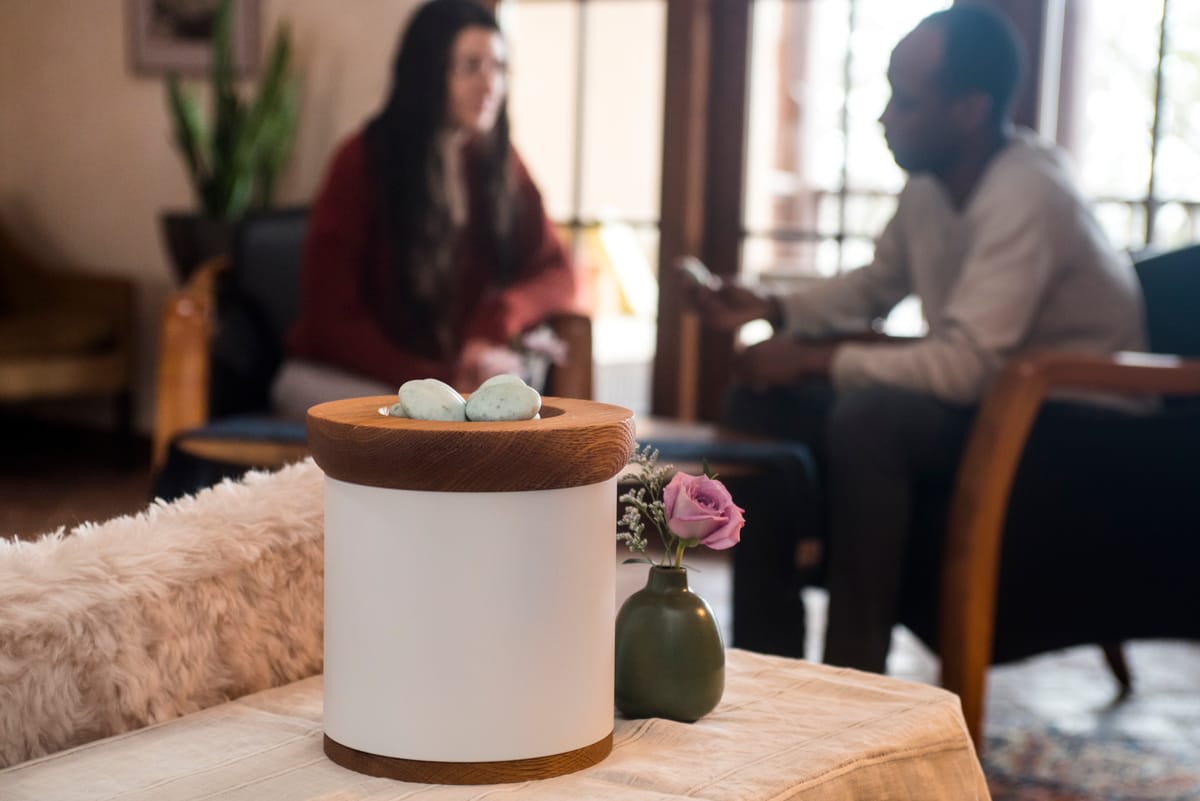
When Conflict Threatens to Overshadow Love
Memorial disagreements become particularly painful when they threaten to overshadow the love and grief that brought everyone together in the first place. If you find yourself in extended conflict with family members over memorial decisions, consider these reframes:
This disagreement is happening because everyone loved the person who died deeply. If they didn't matter, there would be no conflict. The intensity of disagreement often reflects the intensity of love.
There is no perfect memorial choice that will fix grief. Even if your preferred memorial option is chosen, you will still face the reality of loss. The memorial matters, but it won't remove the pain of absence.
Preserving family relationships serves as a memorial to the deceased. For most people, knowing their death would cause lasting division among those they loved would cause pain. Finding a way forward together honors them perhaps more than any specific memorial choice.
Years from now, you're likely to remember less about the memorial decisions and more about how family members treated each other during this difficult time. Choose actions you'll be able to live with in the long term.
A customer who chose not to be named shared: "When my spouse passed, I was looking for something special and different. Parting Stone was the perfect choice. I've shared them with our children, and it's helped us all in our grieving process. I carry one with me always and find comfort in being able to touch it throughout the day. Having something tangible has been very healing."

Finding Your Path Forward
Memorial conflicts are painful, but they don't have to be permanent. The strategies in this article offer frameworks for moving forward: understanding the roots of conflict, communicating with grief-informed approaches, exploring creative solutions that honor multiple preferences, and seeking professional support when needed.
Remember that resolution doesn't require unanimity. It requires respect, willingness to understand different perspectives, and often, creative thinking about solutions beyond traditional either/or choices. The goal isn't that everyone gets exactly what they want; it's that everyone feels heard, that the person who died is honored, and that family relationships survive this crisis intact.
If your family is struggling with memorial disagreements, start by acknowledging the difficulty everyone is experiencing. Create space for grief expression separate from decision-making conversations. Seek to understand the values underneath stated positions. And consider whether solutions exist that can honor multiple preferences rather than forcing a single path.
The person you lost deserves to be memorialized in a way that reflects their life and values. You and your family deserve to find a path forward that allows you to grieve together rather than in opposition. Sometimes, that path requires patience, creativity, and willingness to sit with discomfort. But it's a path worth finding.
Frequently Asked Questions
What should I do if my family can't agree on whether to choose burial or cremation?
Start by identifying whether the deceased left any documented preferences or verbal wishes that family members remember. If they expressed a clear preference, honoring that can resolve the disagreement. If preferences are unclear, explore the values underlying each position. Some family members may have religious concerns about cremation, while others prioritize environmental or practical considerations. Sometimes hybrid solutions work: you might hold traditional services that honor one family member's needs before proceeding with cremation, or choose cremation with specific religious protocols if those exist within your tradition. When agreement truly can't be reached, the legal hierarchy of decision-making authority provides a final framework, though this should be a last resort after genuine attempts at resolution.
Is it appropriate to divide cremated remains among multiple family members?
Dividing cremated remains among family members is increasingly common and widely accepted across most cultures and religions. There are no laws prohibiting this practice in most jurisdictions, and it can provide meaningful solutions when family members live in different places or want different types of memorials. Some families choose to divide traditional ashes into multiple urns, while others prefer options like solidified remains that can be easily shared without the emotional difficulty of portioning ashes. The appropriateness of dividing remains depends primarily on the deceased's stated wishes if they left any, and on your family's comfort level with the practice. If religious or cultural concerns exist, consulting with religious leaders from your tradition can provide guidance specific to your beliefs.
How can we prevent memorial planning conflicts in our own family?
The most effective prevention is clear communication about preferences before crisis occurs. Have conversations about memorial wishes while everyone is healthy, document those preferences in writing, and make sure relevant family members know where to find this documentation. Consider formal funeral pre-planning, which removes financial uncertainty and decision-making burden from grieving family members. These conversations can happen naturally around prompts like attending a funeral, updating estate plans, or simply expressing care for family members who will someday face these decisions. Beyond documentation, fostering healthy family communication patterns in general makes difficult conversations during grief more manageable because the relationship foundation is strong.
What legal rights do different family members have regarding memorial decisions?
Legal rights for controlling disposition of remains typically follow a hierarchy: surviving spouse has first rights, followed by adult children (usually by majority if there's more than one), then parents, then siblings. Specifics vary by jurisdiction, so consulting with a funeral director or attorney familiar with local law provides clarity. However, the deceased can override this hierarchy by legally designating a specific person to make memorial decisions, usually through advance directives, designation of agent for body disposition, or clear language in a will. Legal authority doesn't eliminate ethical obligations to consider the deceased's wishes and consult with other close family members, but it does provide a framework when disagreements can't be resolved through discussion. Courts can be asked to intervene in extreme conflicts, but this is rare and usually damages family relationships significantly.
When should we involve a professional mediator in memorial planning disagreements?
Consider professional mediation when: family discussions repeatedly end in anger or hurt without progress, historical family tensions are resurfacing and overwhelming current decisions, one or more family members are being excluded from conversations entirely, threats of legal action have been made, or the disagreement is causing significant distress that's interfering with grieving. Professional mediators, grief counselors, or family therapists trained in bereavement can provide neutral ground for difficult conversations and help families find solutions they couldn't reach alone. Experienced funeral directors sometimes serve this mediating role as well, though for families with deep-seated conflicts, a professional trained specifically in family systems and grief may be more effective. The cost and time investment of professional support is usually worthwhile when the alternative is lasting family division.
How do we honor diverse cultural or religious traditions when family members come from different backgrounds?
Interfaith or intercultural families often face unique memorial planning challenges when traditions conflict. Successful approaches typically involve education, compromise, and sometimes sequential or hybrid ceremonies. Start by having each family member explain the core values their tradition emphasizes in death rituals, rather than just stating positions. Often, you'll find that different traditions value similar things like respect for the body, community support for survivors, or marking the significance of the loss, even if specific practices differ. Consider whether elements from multiple traditions can be incorporated into a single service, or whether holding separate ceremonies for different family communities makes sense. Some families choose to honor the tradition of the deceased themselves, regardless of current family members' practices. Consulting with religious or cultural leaders from the relevant traditions can provide guidance on which elements are essential versus flexible. Remember that the goal is honoring the deceased while supporting the entire family's grieving process, which sometimes requires creative solutions that don't perfectly fit any single tradition.
About the Editor
Cathy Sanchez Babao is a Grief Coach at Parting Stone, a grief educator, counselor, author, and columnist who has dedicated her career to helping individuals and families navigate loss. She writes the “Roots and Wings” column for the Philippine Daily Inquirer and is the author of Heaven’s Butterfly and Between Loss and Forever: Filipina Mothers on the Grief Journey. Cathy holds a B.S. in Business Administration and Management from Ateneo de Manila University and an M.A. in Family Psychology and Education from Miriam College, with advanced grief training at the Center for Loss & Life Transition and the Center for Prolonged Grief at Columbia University.
References
Alderfer, M. A., Fiese, B. H., Gold, J. I., Cutuli, J. J., Holmbeck, G. N., Goldbeck, L., ... & Patterson, J. (2008). Evidence-based assessment in pediatric psychology: Family measures. Journal of Pediatric Psychology, 33(9), 1046-1061. https://doi.org/10.1093/jpepsy/jsm083
Bandura, A. (1977). Social learning theory. Prentice Hall.
Bonanno, G. A., Wortman, C. B., Lehman, D. R., Tweed, R. G., Haring, M., Sonnega, J., ... & Nesse, R. M. (2002). Resilience to loss and chronic grief: A prospective study from preloss to 18-months postloss. Journal of Personality and Social Psychology, 83(5), 1150-1164. https://doi.org/10.1037/0022-3514.83.5.1150
Bowen, M. (1978). Family therapy in clinical practice. Jason Aronson.
Corless, I. B., Limbo, R., Bousso, R. S., Wrenn, R. L., Head, D., Lickiss, N., & Wass, H. (2014). Languages of grief: A model for understanding the expressions of the bereaved. Health Psychology and Behavioral Medicine, 2(1), 132-143. https://doi.org/10.1080/21642850.2013.879041
Coyne, J. C. (1976). Toward an interactional description of depression. Psychiatry, 39(1), 28-40. https://doi.org/10.1080/00332747.1976.11023874
Devine, M. (2017). It's ok that you're not ok: Meeting grief and loss in a culture that doesn't understand. Sounds True.
Folkman, S., & Moskowitz, J. T. (2000). Positive affect and the other side of coping. American Psychologist, 55(6), 647-654. https://doi.org/10.1037/0003-066X.55.6.647
Gelcer, E. (1983). Mourning is a family affair. Family Process, 22(4), 501-516. https://doi.org/10.1111/j.1545-5300.1983.00501.x
Heeke, C., Kampisiou, C., Niemeyer, H., & Knaevelsrud, C. (2019). A systematic review and meta-analysis of correlates of prolonged grief disorder in adults exposed to violent loss. European Journal of Psychotraumatology, 10(1), Article 1583524. https://doi.org/10.1080/20008198.2019.1583524
Horowitz, M. J., Siegel, B., Holen, A., Bonanno, G. A., Milbrath, C., & Stinson, C. H. (1997). Diagnostic criteria for complicated grief disorder. American Journal of Psychiatry, 154(7), 904-910. https://doi.org/10.1176/ajp.154.7.904
Hudson, P., Aranda, S., & Kristjanson, L. J. (2004). Meeting the supportive needs of family caregivers in palliative care: Challenges for health professionals. Journal of Palliative Medicine, 7(1), 19-25. https://doi.org/10.1089/109662104322737214
Kissane, D. W., & Bloch, S. (2002). Family focused grief therapy: A model of family-centred care during palliative care and bereavement. Open University Press.
Kissane, D. W., McKenzie, M., Bloch, S., Moskowitz, C., McKenzie, D. P., & O'Neill, I. (2006). Family focused grief therapy: A randomized, controlled trial in palliative care and bereavement. American Journal of Psychiatry, 163(7), 1208-1218. https://doi.org/10.1176/ajp.2006.163.7.1208
Kramer, B. J., Kavanaugh, M., Trentham-Dietz, A., Walsh, M., & Yonker, J. A. (2010). Predictors of family conflict at the end of life: The experience of spouses and adult children of persons with lung cancer. The Gerontologist, 50(2), 215-225. https://doi.org/10.1093/geront/gnp121
Kübler-Ross, E., & Kessler, D. (2005). On grief and grieving: Finding the meaning of grief through the five stages of loss. Scribner.
Lobb, E. A., Kristjanson, L. J., Aoun, S. M., Monterosso, L., Halkett, G. K., & Davies, A. (2010). Predictors of complicated grief: A systematic review of empirical studies. Death Studies, 34(8), 673-698. https://doi.org/10.1080/07481187.2010.496686
Lundorff, M., Holmgren, H., Zachariae, R., Farver-Vestergaard, I., & O'Connor, M. (2017). Prevalence of prolonged grief disorder in adult bereavement: A systematic review and meta-analysis. Journal of Affective Disorders, 212, 138-149. https://doi.org/10.1016/j.jad.2017.01.030
Maercker, A., & Horn, A. B. (2013). A socio-interpersonal perspective on PTSD: The case for environments and interpersonal processes. Clinical Psychology & Psychotherapy, 20(6), 465-481. https://doi.org/10.1002/cpp.1805
Prigerson, H. G., Horowitz, M. J., Jacobs, S. C., Parkes, C. M., Aslan, M., Goodkin, K., ... & Maciejewski, P. K. (2009). Prolonged grief disorder: Psychometric validation of criteria proposed for DSM-V and ICD-11. PLoS Medicine, 6(8), Article e1000121. https://doi.org/10.1371/journal.pmed.1000121
Thomas, P. A., Liu, H., & Umberson, D. (2017). Family relationships and well-being. Innovation in Aging, 1(3), Article igx025. https://doi.org/10.1093/geroni/igx025
Worden, J. W. (2009). Grief counseling and grief therapy: A handbook for the mental health practitioner (4th ed.). Springer Publishing Company.