
Memorial Quality: What Makes the Difference
Understand memorial quality factors that make the difference. Learn about materials, craftsmanship, and standards for lasting memorial choices. Expert guidance on choosing durable memorials.


Key Takeaways
- Material composition and durability science are the foundation of memorial quality, with granite leading traditional options due to its high quartz content and weather resistance
- Manufacturing precision and quality control measures distinguish superior providers from those relying solely on subjective craftsmanship assessments
- Environmental resistance testing and documented performance data provide verifiable evidence of memorial longevity
- Professional certifications and industry standards from organizations like NFDA offer additional quality assurance for families making lasting decisions
Reflections on love, loss, and the ways we carry them.
When families begin asking about quality, it’s rarely about appearances alone. It’s about trust. About choosing something that can quietly carry the weight of love, memory, and time. When a memorial is meant to last, the question becomes deeply personal: Will this hold what matters most to me?
I often remind clients that quality is not just what you see, it’s what endures. Mary, a widow from Arizona, once shared how an unexpected email led her to consider a different kind of memorial. Her late husband was an engineer, someone who believed in rigor and process. Learning that his remains could be transformed through a carefully documented scientific method resonated with her in a way polished stone never had. When the stones arrived, she was surprised by their calm beauty, their smoothness, their quiet weight. “They invite stillness,” she said. “People instinctively hold them.”
That’s where quality lives: in materials that are durable, yes—but also in intention, consistency, and care. Scientific solidification doesn’t rely on chance or quarry variations. It follows a patient, precise process designed to create something permanent and safe, something meant to be touched and shared.
In grief, we long for what won’t crumble. A well-made memorial doesn’t shout its worth. It simply remains. Steady, dignified, and worthy of the love it carries.
Cathy Sanchez Babao
Parting Stone Grief Coach
Understanding Memorial Quality Anxiety
When you're ready to create something lasting for your loved one, quality concerns naturally surface. This isn't about perfectionism - it's about ensuring that your choice honors their memory in a way that feels worthy of the relationship you shared. Quality assurance becomes especially important when creating something permanent, something that will represent your love for years or even decades to come.
Many families find themselves overwhelmed by conflicting claims about memorial quality. Traditional memorial materials like granite and marble have dominated the industry for generations, yet each comes with its own set of quality considerations that aren't always clearly explained. Meanwhile, newer approaches to memorial creation, including scientific solidification processes, offer different quality metrics altogether.
Mary from Arizona 🖤 experienced this quality revelation firsthand: An email from Parting Stone arrived in my inbox the day after my husband passed. It mentioned the material scientists at Los Alamos National Laboratory who had developed the process. My engineer spouse had once applied for a position there, and I took that as a sign that I was meant to look into turning his cremains into Parting Stones... I was surprised at how comforting it was. People are drawn to the smoothness of the stones, and they evoke a meditative quality and a sort of serenity.
What Factors Determine Memorial Quality?
Memorial quality depends on five critical factors: material composition and durability, manufacturing precision and consistency, environmental resistance capabilities, quality control documentation, and long-term performance validation. These factors work together to determine whether a memorial will maintain its beauty and structural integrity over time.
Material composition forms the foundation of all memorial quality considerations. Traditional granite memorials derive their strength from high quartz and feldspar content, making them significantly more durable than softer stone alternatives. The molecular structure of these materials determines their resistance to weathering, their ability to maintain surface finish, and their overall longevity.
Manufacturing precision separates superior memorial providers from those relying on inconsistent craftsmanship. Industry leaders implement systematic quality controls throughout production, including laser measurement for precision specifications, digital documentation of progress, and systematic quality checkpoints that ensure consistent outcomes regardless of individual craftsman skill variations.
Material Science and Composition Analysis
Understanding the science behind memorial materials helps families make informed quality decisions. Granite's exceptional durability stems from its unique geological formation. Granite consists of mineral grains tightly bonded together over millions of years, resulting in a material harder than steel. This inherent strength makes granite a preferred choice for both structural and memorial applications.
However, not all granite meets the same quality standards. Different quarries yield different mineral compositions, accounting for significant variations in both durability and color. Premium granite typically contains higher concentrations of quartz and feldspar, while lower-grade alternatives may include more porous materials that compromise long-term integrity.
Traditional marble, while historically popular, presents different quality considerations. Marble's calcium carbonate composition makes it susceptible to acid rain and extreme weather conditions, requiring more careful maintenance to preserve its appearance over time.
Scientific Innovation in Memorial Quality
The most significant advancement in memorial quality comes from scientific approaches to material development. Rather than relying solely on natural stone variations, scientific processes can create consistent, verifiable outcomes through controlled methodologies.
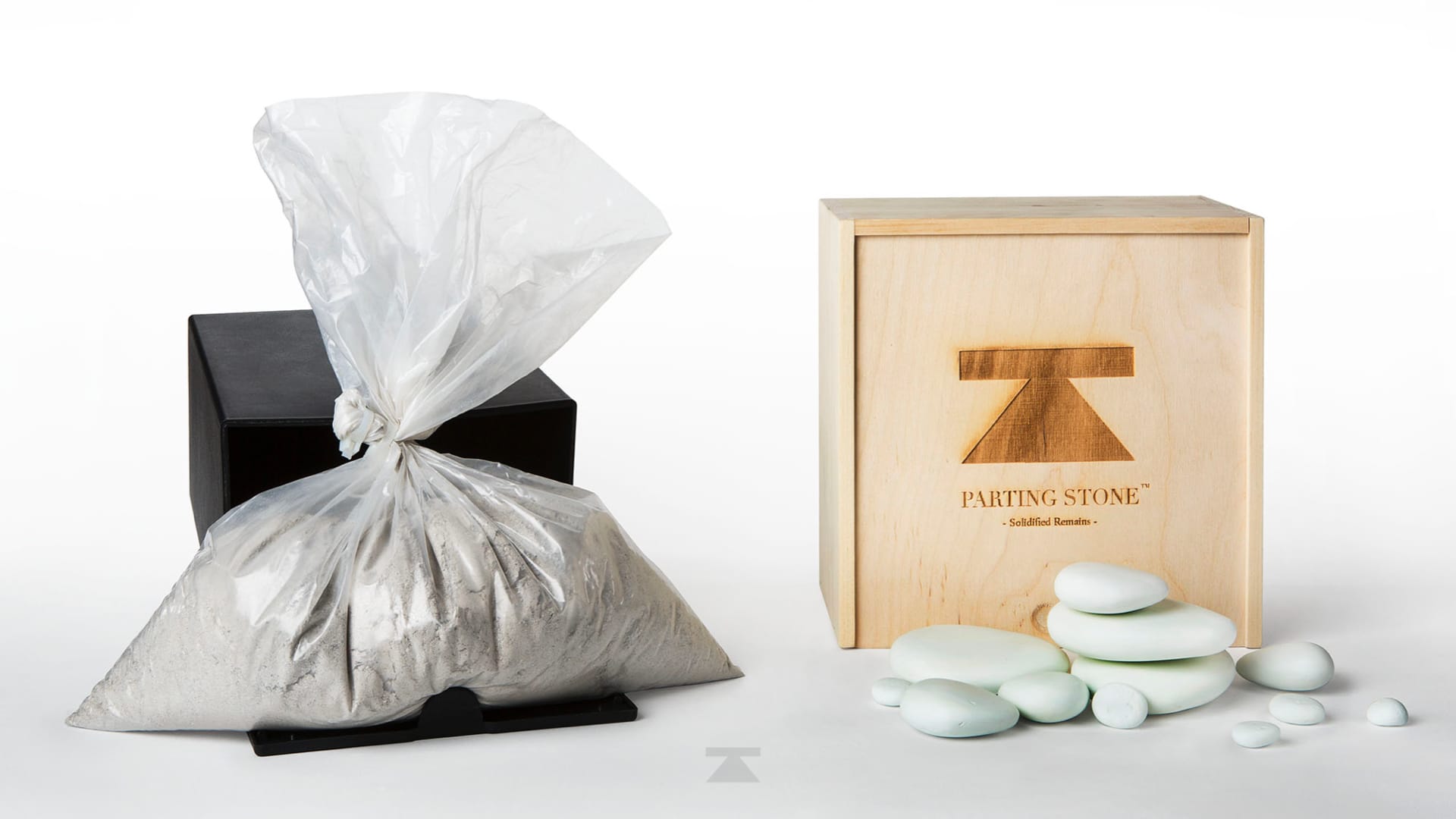
Solidified remains, for example, represent a completely different approach to memorial quality. Validated by material scientists at Los Alamos National Laboratory, the solidification process transforms cremated remains into 40 to 80 smooth, stone-like forms that combine the permanence of traditional materials with the emotional connection of containing actual remains.
This scientific approach addresses quality concerns through documented process controls. The solidification process involves precise refinement, controlled formation, and systematic heating protocols that ensure consistent hardness and permanence. The resulting solidified remains act and feel very much like normal river stones, with material properties that are clean, permanent like ceramic, and designed to outlast traditional memorial materials.
Quality Control and Documentation Standards
Superior memorial quality requires systematic documentation and verification processes. Professional memorial providers implement rigorous quality control measures throughout production, including material sourcing verification, production monitoring, and final inspection protocols.
Industry standards play a crucial role in quality assurance. Funeral homes belonging to the National Funeral Directors Association are held accountable through NFDA's enforceable Code of Professional Conduct, which outlines ethical and professional practices that raise the bar for quality service delivery.
For families seeking the highest quality standards, scientific documentation provides verifiable evidence of material performance. Environmental impact studies, durability testing results, and performance metrics offer objective quality measures that go beyond subjective aesthetic assessments.
Environmental Resistance and Longevity Testing
Environmental factors significantly impact memorial longevity, making resistance testing a crucial quality indicator. Memorials face exposure to sunlight, rain, snow, and fluctuating temperatures, requiring materials and treatments that can withstand these conditions without degradation.
Traditional materials demonstrate varying environmental resistance capabilities. Granite shows exceptional weather resistance, maintaining its appearance and structural integrity across diverse climate conditions. Bronze materials develop natural patina over time without compromising their underlying durability, making them suitable for long-term outdoor exposure.
Scientific Environmental Testing
Advanced memorial technologies undergo rigorous environmental testing to validate their performance claims.
Climate considerations influence material selection significantly. Regions with extreme weather conditions require materials with proven resistance to thermal cycling, moisture penetration, and chemical exposure. Families in these areas benefit from choosing materials with documented environmental testing results.
Long-term Performance Validation
Quality memorial providers offer performance validation through customer testimonials and documented outcomes spanning multiple years. Real-world performance data provides the most reliable quality indicators, showing how materials and manufacturing processes perform under actual conditions.
Manufacturing Precision and Consistency
Systematic manufacturing approaches produce more reliable quality outcomes than traditional artisan methods alone. Modern memorial production employs laser measurement for precision specifications, digital photography for progress documentation, and systematic quality checkpoints that ensure consistent results regardless of individual craftsman variations.
Process standardization eliminates quality inconsistencies that can occur with purely handcrafted approaches. While traditional craftsmanship maintains its value, combining skilled artisans with systematic quality controls produces optimal results for families seeking reliable quality outcomes.
Scientific Process Controls
Advanced memorial technologies implement laboratory-grade process controls. The solidification process exemplifies this approach, utilizing 8 to 10 week processing timelines that ensure proper methodology completion rather than rushing production for faster turnaround.
Each step follows documented protocols: foreign contaminant removal, precise refinement into powder, controlled binder addition for optimal clay-like material formation, and systematic heating in kilns to achieve proper hardness and permanence. This methodical approach ensures consistent quality outcomes that families can trust.
Quality verification occurs throughout production, not just at final inspection. This systematic approach addresses quality concerns proactively rather than reactively, resulting in higher customer satisfaction and reduced quality issues.
Traditional vs. Scientific Quality Approaches
Understanding the differences between traditional and scientific quality approaches helps families make informed memorial decisions. Traditional memorial quality relies on natural material selection and artisan craftsmanship, with outcomes that can vary based on individual skill levels and material inconsistencies.
Scientific quality approaches utilize controlled processes and documented methodologies to achieve consistent, verifiable results. This doesn't replace the value of craftsmanship but adds systematic quality assurance that reduces uncertainty and improves reliability.
Comparative Quality Analysis
| Quality Factor | Traditional Granite | Scientific Solidification |
|---|---|---|
| Material Consistency | Varies by quarry and batch | Controlled through systematic process |
| Quality Documentation | Limited to visual inspection | Complete process documentation |
| Environmental Testing | General material properties | Specific environmental impact studies |
| Emotional Connection | Symbolic representation | Contains actual remains |
| Longevity Validation | Centuries of historical evidence | Laboratory testing and customer feedback |
Innovation in Memorial Quality
Scientific innovation doesn't replace traditional values but enhances the quality assurance available to families.
This scientific approach addresses quality concerns that traditional methods cannot easily resolve: consistent material properties, predictable outcomes, documented environmental safety, and verifiable long-term performance. For families who value both emotional connection and scientific rigor, this represents significant quality advancement.
Professional Certifications and Industry Standards
Professional certifications provide quality assurance through third-party validation of materials, processes, and service delivery. Industry organizations like the National Funeral Directors Association establish quality standards that member firms must maintain to retain their professional standing.
Memorial industry standards cover multiple quality dimensions: material specifications, manufacturing processes, installation procedures, and ongoing maintenance requirements. ASTM International standards provide testing methods and specifications that help ensure consistent quality across different providers and materials.
Certification Benefits for Families
Professional certifications offer families several quality advantages: verified training standards for service providers, documented material specifications, established complaint resolution procedures, and ongoing quality monitoring through professional association oversight.
Scientific certifications add another quality layer through laboratory validation and peer review processes. The collaboration with Los Alamos National Laboratory provides scientific credibility that goes beyond industry self-regulation to include independent research institution validation.
How to Evaluate Memorial Quality Options
When you're ready to assess memorial quality options, systematic evaluation helps ensure confident decision-making. Your thorough approach to quality evaluation honors both your loved one and your family's long-term satisfaction with this important choice.
Step 1: Research Material Properties and Documentation
Begin with material property research for any options you're considering. Look for providers who can explain their material composition, manufacturing processes, and quality control measures in specific rather than general terms. Quality providers welcome detailed questions about their methods and outcomes.
Request documentation of material testing, environmental resistance data, and long-term performance studies. Providers confident in their quality will have this information readily available and presented in accessible formats.
Step 2: Evaluate Process Transparency and Controls
Assess how transparent each provider is about their production processes. Quality providers can describe each step of their methodology, explain their quality checkpoints, and provide estimated timelines with reasoning for each phase.
Scientific processes should include clear explanations of how quality is maintained throughout production. For example, understanding why solidification requires 8 to 10 weeks helps families appreciate the quality considerations involved in proper methodology completion.
Step 3: Review Customer Experience Documentation
Customer testimonials provide valuable quality insights, especially when they include specific details about outcomes rather than general satisfaction statements. Look for testimonials that mention specific quality attributes like durability, appearance maintenance, or long-term satisfaction.
Professional references offer additional quality validation. Providers working with 600+ funeral homes, for example, demonstrate professional endorsement that indicates consistent quality delivery across multiple institutional relationships.
Step 4: Consider Long-term Quality Assurance
Evaluate what quality assurance each provider offers for long-term satisfaction. This includes both material warranties and process guarantees, as well as customer support for any future concerns.
Scientific quality approaches often include better long-term assurance because their documented processes create more predictable outcomes and verifiable performance standards.
Frequently Asked Questions
What are the most important memorial quality factors?
Material durability, manufacturing precision, and environmental resistance represent the three most critical quality factors. Material composition determines basic longevity, manufacturing precision ensures consistent outcomes, and environmental resistance validates long-term performance under actual conditions. Professional documentation and customer validation provide additional quality assurance.
How do I verify memorial quality claims?
Request specific documentation including material testing results, process certifications, and customer references spanning multiple years. Quality providers can substantiate their claims with verifiable evidence rather than general marketing statements. Professional certifications and institutional partnerships offer additional verification of quality standards.
What makes scientific memorial processes different quality-wise?
Scientific processes utilize controlled methodologies and documented quality assurance rather than relying solely on natural material variations and individual craftsmanship. This includes systematic quality checkpoints, environmental testing, and performance validation through research institutions like Los Alamos National Laboratory, resulting in more predictable and verifiable quality outcomes.
How long should quality memorial materials last?
Superior memorial materials should maintain their integrity and appearance for decades or centuries. Granite typically lasts several hundred years with minimal maintenance, while scientifically developed materials like solidified remains are designed to outlast traditional options through controlled composition and systematic quality assurance.
What quality questions should I ask memorial providers?
Ask about material sourcing, quality control processes, environmental testing results, and customer satisfaction data. Request specific details about manufacturing timelines, quality checkpoints, and long-term performance validation. Quality providers welcome detailed questions and can provide substantial documentation to support their claims.
Do higher prices always indicate better memorial quality?
Price alone doesn't guarantee superior quality, but extremely low prices often indicate compromised materials or processes. Quality materials and systematic manufacturing require appropriate investment, so significantly below-market pricing may suggest quality shortcuts. Focus on documented quality evidence rather than price as your primary quality indicator.
About the Editor
Cathy Sanchez Babao is a Grief Coach at Parting Stone, a grief educator, counselor, author, and columnist who has dedicated her career to helping individuals and families navigate loss. She writes the “Roots and Wings” column for the Philippine Daily Inquirer and is the author of Heaven’s Butterfly and Between Loss and Forever: Filipina Mothers on the Grief Journey. Cathy holds a B.S. in Business Administration and Management from Ateneo de Manila University and an M.A. in Family Psychology and Education from Miriam College, with advanced grief training at the Center for Loss & Life Transition and the Center for Prolonged Grief at Columbia University.
References
Booms Stone Company. (2016, August 22). Marble specifications. https://www.boomsstone.com/specifications/marble/
Hathaway Memorials. (2025, July 7). Cemetery headstones: The 5 most durable materials ranked. https://hathawaymemorials.com/cemetery-headstones-the-5-most-durable-materials-ranked/
Haven Memorials. (2025, June 25). Choosing the best material for headstones: A guide to memorial stones. https://havenmemorials.co.uk/blog/advice/choosing-the-best-material-for-headstones
Just High Stone. (2024, May 14). How do you ensure the quality and durability of your tombstones, and what measures are in place to meet industry standards? https://www.justhighstone.com/how-do-you-ensure-the-quality-and-durability-of-your-tombstones-and-what-measures-are-in-place-to-meet-industry-standards.html
Marble Guide. (2017, July 20). Marble – International standardization. https://marbleguide.com/news/marble-international-standardization/
National Funeral Directors Association. (2025). Education. https://nfda.org/education
R&D Marble, Inc. (2025, April 15). How to determine the quality of granite kitchen countertops. https://www.rdmarble.com/blog/granite-countertops/how-to-determine-quality/
Rome Monument. (n.d.). Quality and color of granite for a monument or mausoleum. https://www.romemonuments.com/choose_the_granite_color_for_a_monument
Shivam Stone. (2021, December 10). Quality standards of granite, marble, fireplace & stone articles. https://www.shivamstonex.com/quality-standard/
Steedley Monument Works. (2025, March 10). Monuments that last: Choosing the right materials for enduring memorials. https://steedleymonumentworks.com/2025/03/monuments-that-last-choosing-the-right-materials-for-enduring-memorials/
Stone Discover. (2024, October 18). Which materials are best for memorial headstones? https://www.stonediscover.com/blog/materials-for-memorial-headstones/