Including Grandchildren in Memorial Planning: An Age-Appropriate Guide for Families
Practical guidance for including young children in grandparent memorial planning. Learn age-appropriate ways to help grandchildren honor, remember, and heal after loss.


The phone call came early Tuesday morning. Your mother had passed peacefully, just as the hospice team had prepared you for. But as you hung up the phone and turned to see your seven-year-old daughter watching from the hallway, a completely different kind of grief washed over you. How do you tell her? What will this mean for her? Should you include her in the memorial planning, or would that be too much?
These questions sit heavily in the hearts of parents navigating the intersection of their own grief and their children's emotional needs. You want to protect your kids from pain, yet you also sense that shielding them completely might do more harm than good. Your instinct to include grandchildren in memorial planning stems from profound wisdom: children who participate in age-appropriate ways often develop healthier relationships with grief, stronger family connections, and more resilient coping skills throughout their lives.
This guide explores how to honor both your protective instincts and your desire to help your children heal. We'll walk through what children understand about death at different developmental stages, how to include them meaningfully in memorial activities, and how to create lasting connections that support their grief journey long after the service ends.
Key Takeaways
- Children process grief differently at each developmental stage, from concrete understanding in early childhood to more complex emotional processing in the preteen years.
- Including grandchildren in memorial activities supports long-term emotional health and helps them maintain meaningful connections to their grandparent.
- Tangible memorial options, like solidified remains that children can safely hold and interact with, provide developmentally appropriate ways for young minds to understand and process loss.
- Age-appropriate language matters: avoid confusing euphemisms and instead use clear, simple words that match your child's developmental stage.
- Professional support can be beneficial when children show signs of prolonged difficulty or when parents feel uncertain about how to help.
Reflections on love, loss, and the ways we carry them.
As a grief counselor who has worked with many bereaved families, I’ve seen how children’s grief unfolds differently from that of adults. Their understanding of loss grows with them. What a three-year-old grasps about death is vastly different from what a twelve-year-old comprehends. This truth is at the heart of this article, which beautifully reminds us that the way we involve children in memorial rituals can shape not only their healing but also their lifelong relationship with remembrance.
In my practice, I once worked with a family who lost their matriarch, a beloved grandmother who baked every Sunday. Her eight-year-old grandson, Miguel, was given one of her solidified remains to keep in a small wooden box beside his bed. “It helps me remember her stories,” he told me one day. That simple act of giving him something tangible to hold, allowed Miguel to process an abstract concept like death through touch and memory. It became a bridge between presence and absence.
This mirrors what developmental research tells us: children need concrete ways to engage with grief. We do them a disservice when we exclude them from rituals out of fear they’ll be traumatized. In truth, it’s the exclusion, not participation, that deepens confusion and prolongs pain.
As parents, grandparents, and caregivers, our task is not to shield children from sorrow but to walk beside them through it—gently, truthfully, and with love. When we invite them into remembrance through age-appropriate ways, whether lighting a candle, placing a stone, or sharing a story, we teach them that grief, too, can hold beauty. And that love, once given, never truly disappears; it simply takes new forms that little hands can still hold.
Cathy Sanchez Babao
Parting Stone Grief Coach
Understanding Children's Developmental Needs in Grief
Children don't grieve the way adults do. Their understanding of death, their emotional capacity, and their ability to express complex feelings evolve significantly from toddlerhood through the preteen years. Research from the National Child Traumatic Stress Network shows that grief reactions in young people are profoundly influenced by ongoing developmental processes and manifest differently depending on the child's age and developmental stage (Kaplow et al., 2018).
How Young Minds Process Loss
For a three-year-old, death might seem reversible, like sleep or a long trip. They may ask repeatedly when Grandma is coming back, not from denial but from genuine cognitive limitations in understanding permanence. An eight-year-old, by contrast, fully grasps that death is final but may struggle with abstract concepts about what happens after someone dies. By age twelve, children can hold the emotional complexity of sadness, anger, relief, and love all at once.
These differences matter enormously when planning how to include grandchildren in memorials. Karen, a Parting Stone family from Washington 🖤 shared her experience: "When we lost our dad, we wanted each family member to have something meaningful to hold onto, something that honored their unique relationship with him. We gave my eight-year-old daughter one of his solidified remains. She keeps it on her nightstand and tells me it helps her remember the stories Grandpa used to tell her before bed."

A New Way to Hold Close What Matters Most
We transform cremated remains into beautiful, touchable stones that bring comfort when you need it. Something you can hold, share, and keep close.
Why Inclusion Matters for Long-Term Emotional Health
Studies on childhood bereavement consistently show that children who are included in age-appropriate memorial activities develop better outcomes than those who are excluded or overly protected. According to research published in the journal Pediatrics, meaningful inclusion helps children:
- Develop healthy coping mechanisms for future losses
- Maintain continuing bonds with the deceased
- Feel valued and respected as full members of the family
- Process confusing emotions through concrete actions
- Build resilience through supported grief experiences
The key phrase here is "age-appropriate." Inclusion doesn't mean exposing a four-year-old to adult-level emotional intensity or expecting a six-year-old to sit through a three-hour service. It means thoughtfully matching participation to developmental capabilities.
Common Concerns Parents Have About Including Children
"Will this traumatize them?" is perhaps the most frequent worry parents express. The research offers reassurance: what tends to be traumatic for children isn't participating in memorial activities, but rather being excluded from family processes, receiving inadequate emotional support from caregivers, or experiencing significant disruption to their sense of safety and routine (Eluna Network, 2024).
Other common concerns include:
- Worry that children will "act out" during solemn moments
- Fear that exposure to grief will cause lasting psychological harm
- Uncertainty about how much information to share
- Concerns about children seeing adults cry
- Questions about whether children can understand what's happening
These concerns are natural and speak to your care as a parent. What matters most isn't creating a perfect, controlled environment but rather providing consistent emotional support and creating space for children's questions and reactions, whatever form they take.
 Parting Stone Editors
Age-Appropriate Memorial Participation Guidelines
Children's cognitive and emotional development follows predictable patterns, though every child moves through these stages at their own pace. These guidelines offer a framework for thinking about inclusion, not rigid rules.
Ages 2-5: Concrete Understanding and Brief Attention
What They Understand Young children at this stage lack the cognitive ability to grasp death's permanence. They may believe Grandpa is simply away on a trip or that death is reversible, like waking from sleep. Their grief comes in waves, often brief but intense, and they primarily respond to the emotional climate created by adults around them.
How They Process Grief Preschoolers express grief through play, behavioral changes, and physical symptoms rather than words. You might notice regression to earlier behaviors (bedwetting, thumb-sucking), increased clinginess, sleep disruptions, or repeated questions. These responses don't indicate that including them was wrong; they're normal grief reactions at this developmental stage.
Meaningful Ways to Include Them
- Short, concrete participation (5-10 minutes maximum at any formal gathering)
- Hands-on activities like decorating a memory box or coloring a picture for Grandma
- Simple rituals they can repeat, like lighting a candle or placing flowers
- Opportunities to help prepare, like choosing what clothes Grandpa might wear or picking out music he liked
- Physical comfort objects that they can hold during emotional moments
Michelle from Colorado 🖤 found creative ways to help her grandchildren connect with their grandfather: "We had all the grandkids put one of his solidified remains into Build-A-Bears so they could hug their Papa whenever they missed him. A couple days later, I made one for myself too. It gives me peace to hug my dad when I need to."
What to Avoid Don't force young children to stay in emotional situations beyond their capacity, require them to "say goodbye" in prescribed ways, or shame them for playing or laughing during serious moments. Their shorter attention spans and concrete thinking mean they'll naturally move in and out of grief awareness.
Ages 6-8: Emerging Abstract Thinking
What They Understand By early elementary age, children grasp that death is permanent and that everyone eventually dies. However, they may struggle with "why" questions and can develop fears that other loved ones will die too. They understand cause and effect and may fixate on physical details of what happened.
How They Process Grief School-age children often express grief through questions, sometimes repetitive, about the death and what happens after. They may exhibit physical complaints (stomachaches, headaches), difficulty concentrating at school, or behavioral changes. They're developing a vocabulary for emotions, but may still lack words for complex grief feelings.
Meaningful Ways to Include Them
- Active roles in memorial planning, like choosing photos or helping write an obituary
- Creative expression opportunities (drawing pictures, writing letters, making memory books)
- Participation in memorial services with clear expectations set beforehand
- Opportunities to share stories and memories
- Concrete memorial activities like planting a tree or placing a stone in a meaningful location
Dawn from Pennsylvania 🖤 shared how her family created shareable memorial experiences: "We all have stones from Mom and Dad, from Grandma and Grandpa. On wedding days, baptisms, and special occasions, we carry them in our pockets. They get to be with us at our family's favorite vacation spots and in all our homes. The kids understand that this is a special way to bring their grandparents along."
What to Avoid Avoid giving overly detailed explanations about the body after death unless the child specifically asks. Don't dismiss their fears about other family members dying, but offer reassurance about taking care of health and safety. Skip euphemisms that create confusion (more on this in a later section).
Trevor kept the cremated remains of his dad in his sock drawer. Learn how solidified remains helped bring meaning back to one of his most treasured possessions.
Ages 9-12: Complex Emotional Processing
What They Understand Preteens fully comprehend the permanence of death and understand it happens to everyone. They can think abstractly about legacy, memory, and what Grandma meant to the family. They're developing their own belief systems about what happens after death and may ask philosophical questions.
How They Process Grief Older children may mask grief to appear "grown up" or to protect parents they perceive as struggling. They might oscillate between wanting to talk and refusing to discuss the death. Some withdraw to their rooms, others become hyper-focused on school or activities. They're capable of understanding complex emotions but may feel self-conscious expressing them.
Meaningful Ways to Include Them
- Significant roles in memorial planning and decision-making
- Opportunities to speak at services if they choose
- Leadership in creating memorial projects (video tributes, memory books)
- One-on-one conversations about their specific relationship with the deceased
- Choices about how they want to remember and honor their grandparent
- Involvement in selecting meaningful memorial options
Sophie from Oregon 🖤 shared her family's approach: "Some of our grandchildren wanted small stones and others wanted larger ones. Mine was small and fits so nicely in the palm of my hand. Really special prayer moments when grief is overwhelming at times. The ability to hold such a soft stone in my hand is so soothing. Every stone is so beautiful and so comforting."
What to Avoid Don't expect them to "be strong" for younger siblings or to suppress emotions to make adults more comfortable. Avoid treating them as either small children or full adults; they're navigating between both worlds. Don't force participation if they genuinely prefer privacy for their grief.
 Parting Stone Editors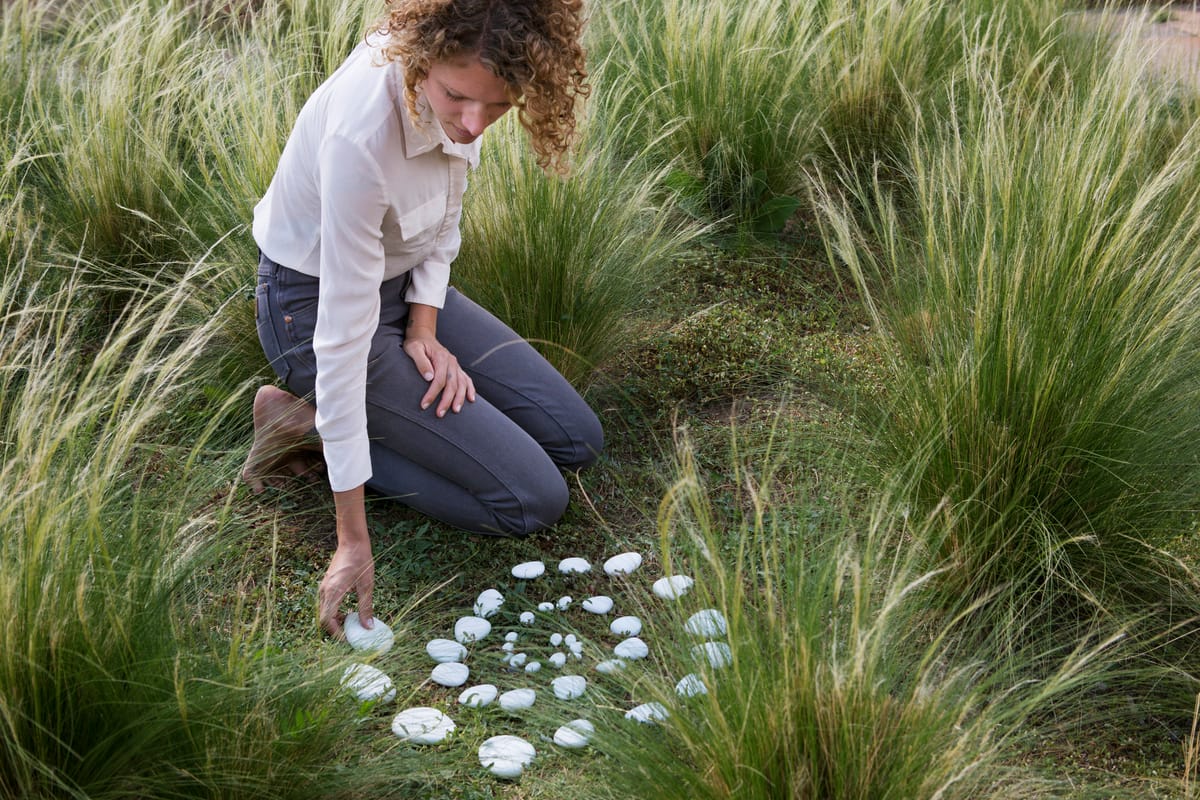
Creating Age-Appropriate Memorial Activities
The most meaningful memorial experiences for children engage multiple senses, allow for active participation, and create tangible connections they can revisit as they grow.
Before the Service
Preparation reduces anxiety for children of all ages. Visit the location where the service will be held if possible, or show pictures and describe what to expect. Explain who will be there, what the room will look like, and what will happen. Be honest about the fact that people will be crying and sad, and that this is normal and okay.
Let children participate in preparation activities that match their developmental level:
- Young children might help choose flowers or pick out a favorite photo
- Elementary-age kids could help create a memory display or write down special memories
- Older children might help with obituary writing, music selection, or creating a video tribute
These preparatory activities serve two purposes: they help children feel included and valued, and they begin the grief process in manageable increments rather than all at once.
During Memorial Activities
Think in terms of participation points rather than requiring sustained involvement. A five-year-old might light a candle at the beginning and then spend most of the service in a quiet play area with a trusted adult. An eight-year-old might share one memory and then sit quietly. A twelve-year-old might help greet guests or hand out programs.
Build in natural breaks and escape valves. Designate a quiet space where children can go if they feel overwhelmed, and identify one adult whose primary role is supporting the children rather than managing logistics or greeting guests.
Remember that children's shorter attention spans and different emotional rhythms don't indicate disrespect. A child who plays quietly during part of a service or who laughs at something funny isn't failing to honor their grandparent. They're being children, which is exactly what they should be.
@mikkzazon The company is @PartingStone ♥️ #partingstones #griefjourney #griefawareness
♬ original sound - Mik Zazon
Creating Lasting Connections
Memorial activities shouldn't end with the service. Children benefit from ongoing rituals and connections they can revisit as they grow and their understanding deepens.
Many families find that tangible memorial options provide developmentally appropriate ways for children to maintain connections. Traditional cremated remains can feel abstract or even frightening to young children, who may worry about spilling ashes or may not understand what they're supposed to do with a sealed urn. Solidified remains, by contrast, offer something children can safely hold, look at, and interact with.
Jean from New Mexico 🖤 explained her choice: "I thought it was appropriate because my parents both loved yard work and having a nice garden and yard. I also like the idea of leaving a stone here or there in their favorite spots they liked to visit. This is a way to keep them incorporated into the garden and anywhere else that was meaningful to them."
The tactile nature of stones speaks to how children process grief. They need concrete, physical connections to abstract concepts. Holding something smooth and beautiful that came from Grandma helps a seven-year-old's brain bridge the gap between "Grandma died" and "I can still feel close to Grandma."
 Parting Stone Editors
What to Say (and Not Say) to Children About Death
The words we choose when talking to children about death matter enormously. Our instinct is often to soften the blow, but euphemistic language creates confusion and can complicate grief.
Age-Appropriate Language for Explaining Death
For Young Children (2-5): Use simple, concrete language: "Grandpa's body stopped working. His heart stopped beating, and he stopped breathing. When someone dies, their body stops doing all the things that keep a person alive. He can't feel anything anymore, and he won't be coming back."
Avoid: "Grandpa went to sleep" (creates fear of sleep), "We lost Grandma" (sounds like she can be found), "God took him" (makes God seem scary or unfair).
For Elementary Age (6-8): Add brief explanations about cause: "Grandma was very sick with cancer. The doctors tried to help her body get better, but the cancer made her too sick. Her body stopped working, and she died. Dying means her body can't do anything anymore, but we'll always remember her and love her."
Acknowledge that death is permanent and happens to everyone eventually, while reassuring them that most people live long lives and children very rarely die.
For Preteens (9-12): Provide more detailed information if they ask, including physical processes and your family's beliefs about what happens after death. "Grandpa's heart attack happened because the vessels in his heart were blocked and couldn't get blood through. His heart stopped, and that meant his whole body stopped working. Some people believe that when our bodies stop, our spirits or souls continue. Our family believes..."
Be honest about the fact that different people have different beliefs, and it's okay to have questions or uncertainty.
@chloebluffcakes Thank you @partingstone 🤍 youve given me an unimaginable gift. One day I will share these with my little sister and carry her wherever we go in life together. #grief #partingstone #loss
♬ Repeat Until Death - Novo Amor
Encouraging Questions and Emotions
Create explicit permission for questions: "You can ask me anything you want to know, and I'll answer as honestly as I can. Some questions I might not know the answer to, and that's okay too."
Prepare for repetitive questions, which don't indicate that children didn't understand your answer. They're processing information in layers, and asking again helps them integrate what they're learning.
When children ask difficult questions ("Did it hurt when he died?" "Where is Grandma now?"), take a breath before answering. Brief, honest responses work better than lengthy explanations. "The doctors say he wasn't in pain at the end. They gave him medicine to make sure he was comfortable."
Normalizing All Emotional Responses
Children's grief reactions can surprise adults. They might laugh at something funny hours after learning about the death. They might seem unaffected one moment and fall apart the next. They might feel angry, relieved, confused, or all these things within minutes.
All of these responses are normal. Grief doesn't follow a script, and children's grief especially comes in waves and spurts.
Nathan from Idaho 🖤 found meaningful ways to honor his father while acknowledging the full family's grief: "The stones are great because we can put them in the garden, at some locations that meant a lot to him, as well as share them with the grandkids. It's something that will last a long time, and everyone in the family can have their own way of remembering."
Normalize your own emotions too. Children benefit from seeing adults express sadness, cry, and then recover. It teaches them that emotions are manageable and that grief doesn't mean being perpetually overwhelmed.
 Parting Stone Editors
Memorial Options That Engage Children
Traditional memorial approaches, while meaningful for adults, may not meet children's developmental needs. Young minds require concrete, sensory experiences to process abstract concepts.
Why Traditional Approaches Sometimes Fall Short
An urn on a shelf might carry deep meaning for you, but to a six-year-old, it's a mysterious container that adults treat with intense seriousness. The abstract nature of cremated remains, the cautions against touching or opening, the very name "ashes" that sounds like what's left in the fireplace, these elements can create confusion or even fear for children.
Burial presents different challenges. Children under eight often don't fully grasp the permanence of burial. Repeated visits to a cemetery plot may feel confusing ("If Grandma is in heaven, why are we talking to her at this stone?") or may not be geographically feasible for families spread across different states.
These aren't flaws in traditional approaches. They simply reflect the reality that what adults find comforting doesn't always translate to what helps children process grief.
The Importance of Tangible Connections
Children's brains are wired for sensory learning. They understand what they can touch, hold, see, and manipulate. Memorial approaches that leverage this reality support children's grief processing in ways that align with their developmental stage.
This is where solidified remains offer a distinctive advantage for families with young children. Rather than ashes that must remain sealed and untouched, solidified remains become something children can safely hold, look at, and incorporate into their own memorial practices.
Tracy from Ohio 🖤 described the difference: "When my Mom passed suddenly, I didn't want an urn full of ashes to sit neglected for years. With solidified remains, we've been able to take both my parents on adventures they never got to have before. My children participate in leaving stones at special places, and they understand what we're doing in a way they couldn't with ashes."
The stones look and feel like smooth river rocks, something familiar and comforting to children. They're beautiful without being precious, durable without being fragile. A child can hold one during a difficult moment, put it in a pocket before a school test, or place it somewhere meaningful without adult supervision.
Bringing Children Into Memorial Decisions
Some families create memory boxes where children can place drawings, letters, photos, and a solidified remain together. Others let children choose favorite locations to place stones, whether in the garden where Grandpa taught them to plant seeds or at the beach where Grandma loved to walk.
Wendy from Indiana 🖤 shared how her father's stones helped the whole family: "I have a little memorial set up with my mother's picture, her cremated remains box, and a tray of five stones representing her five grandchildren. It's something we can all see and touch every day."
The key is that children have agency in how they interact with and honor the memory. A ten-year-old might paint a small stone. A seven-year-old might decide which stone goes on their dresser. A five-year-old might choose where in the garden a stone gets placed.
These aren't random activities. They're children actively constructing their relationship with grief, memory, and loss through concrete actions that match their developmental capabilities.
 Parting Stone Editors
Supporting Children Through the Memorial Process
Including children in memorial planning is just the beginning. The weeks and months afterward require continued attention and support as children process what's happened.
Recognizing Healthy Grief Responses
Children's grief often looks different from adult grief. They may seem fine one day and completely fall apart the next. They might play happily and then suddenly mention Grandma with tears streaming down their face. This isn't unhealthy or concerning. It's how children, with their still-developing emotional regulation systems, move through grief.
Healthy grief responses in children can include:
- Asking the same questions repeatedly
- Playing "funeral" or "death" with dolls or action figures
- Having temporary regression in behaviors (sleep disruptions, toileting accidents, clingy behavior)
- Showing less interest in activities they usually enjoy
- Expressing anger or frustration, sometimes directed at parents
- Seeming unaffected for periods of time, then showing intense emotion
These responses typically diminish in frequency and intensity over several months. The child maintains relationships, engages in school, and shows moments of happiness and normalcy between grief episodes.
When to Seek Professional Support
While most children grieve adaptively, some show signs of more complicated grief responses that benefit from professional support. Consider reaching out to a grief counselor or child therapist if you notice:
- Intense grief reactions lasting more than several months without any signs of lessening
- Complete inability to speak about the deceased or extreme distress at any mention
- Persistent belief that the child caused the death
- Withdrawal from all friends, family, and previously enjoyed activities
- Statements about wanting to die or be with the deceased
- Significant academic decline that doesn't improve
- Physical symptoms (pain, illness) with no medical explanation
These symptoms don't mean you've handled something wrong. They indicate that this particular child, at this particular time, needs additional support beyond what family can provide. The National Child Traumatic Stress Network offers resources for finding grief-informed therapists who specialize in working with bereaved children.
Stephanie from Michigan 🖤 described her family's healing journey: "We each have stones to keep, and we've also left some at his favorite places. The stones allowed us to share and spread my loved one's remains in a meaningful way. I have them displayed in our home where I can see them every day."
Ongoing Family Support Strategies
Create regular opportunities to remember and talk about the deceased. This might be lighting a candle on holidays, sharing stories at dinner, or visiting favorite places. Children need permission and encouragement to maintain a connection with someone who has died.
Be prepared for grief to resurface at developmental transitions. A child who seemed to handle Grandma's death well at age seven may re-grieve at age twelve with a more mature understanding of what was lost. This isn't regression. It's healthy re-processing at a new developmental level.
Maintain routines and structure as much as possible while also allowing flexibility when children are having difficult days. The consistency of regular schedules provides security, but rigidity about "normal" can feel invalidating when grief is intense.
Most importantly, stay emotionally available. Your own grief is real and valid, but children need to know they can come to you with questions, sadness, or memories without overwhelming you. If you're struggling, lean on other adults in your support system so that you can be present for your children's needs.

Conclusion
Including grandchildren in memorial planning honors both the protective instincts you feel as a parent and the deeper wisdom that children need opportunities to grieve, remember, and maintain connection with grandparents who have died.
There's no single right way to include children. The most meaningful approach matches your family's values, your children's developmental stages, and your grandparent's legacy. What matters most is the intention behind inclusion: helping children feel valued, supported, and connected rather than shielded from reality or forced into experiences beyond their capacity.
As you navigate these decisions, trust yourself. You know your children better than any guideline or expert recommendation. Let developmental research and age-appropriate suggestions inform your choices, but ultimately, follow your instinct about what your specific children need at this specific time.
Memorial approaches that provide tangible, sensory connections support children's natural way of processing abstract concepts like death and memory. Whether you choose solidified remains that children can hold and interact with, memory boxes they can contribute to, or ritual activities they can participate in, the goal is the same: helping young people understand that death doesn't end relationship, it transforms it.
Your grandchildren can carry the love, the stories, the values, and the memory of their grandparent throughout their lives. The memorial planning you do now, with thoughtful attention to their developmental needs, lays the foundation for healthy grief processing and lifelong connection.
If you're exploring memorial options that might serve your whole family's needs, including young grandchildren who need concrete ways to understand and honor their grandparent, learning more about solidified remains might be helpful. The process transforms cremated remains into smooth, stone-like forms over approximately 8-10 weeks, creating tangible memorial options that can be safely held, shared across family members, and incorporated into age-appropriate memorial activities. This isn't the right choice for every family, but for many parents navigating how to include children meaningfully, it offers a developmentally appropriate way to honor memory.
Frequently Asked Questions
How do you explain cremation to a young child?
Use simple, concrete language: "After someone dies, their body stops working. Families can choose to have the body made very hot in a special place, which turns it into ashes or small pieces. These ashes or pieces don't hurt, and they help families remember the person who died." For children under 6, keep explanations brief and avoid graphic details. Answer specific questions as they come up rather than providing information they haven't asked for.
Should children attend funeral services for grandparents?
Most child development experts recommend including children ages 3 and older in some form of memorial participation, but attendance should be flexible rather than mandatory. Prepare children thoroughly for what to expect, provide an adult specifically designated to support them, and create an exit plan if they become overwhelmed. Very young children (under 3) may find limited benefit from attendance but can participate in other ways like lighting candles at home or contributing to a memory box.
What if my child doesn't want to participate in memorial activities?
Respect their choice while keeping the door open for future participation. Some children process grief through withdrawal rather than engagement, and forcing participation can feel invalidating. Offer alternatives: "You don't have to come to the service, but maybe you'd like to draw a picture for Grandma that we can display?" or "If you change your mind, you're always welcome to join us." Continue inviting without pressuring as children's readiness often changes over time.
How long does grief typically last in children?
Children's grief isn't linear and doesn't have a defined endpoint. Intense reactions typically become less frequent over 6-12 months, but children may re-grieve at new developmental stages as their understanding of death and loss deepens. This is healthy and normal. What's more important than duration is whether the child maintains functioning in other areas (school, friendships, daily activities) and shows some moments of joy and normalcy between grief episodes.
What memorial options work best for families with children of different ages?
Memorial options that allow for individualized interaction serve multi-age families well. Solidified remains offer flexibility: a 4-year-old might simply hold a stone when missing Grandpa, an 8-year-old might paint or decorate a stone, and a 12-year-old might choose meaningful places to leave stones. Memory books where each child contributes at their skill level, family rituals that can be scaled to age-appropriateness, and digital photo albums children can revisit as they grow also work well across developmental stages.
How do I talk about death without mentioning my religious or spiritual beliefs?
Focus on the physical realities of death that are universally true: "The body stopped working and can't do anything anymore. Different families believe different things about what happens after the body stops. Some believe in heaven, some believe in reincarnation, and some believe other things. What's most important is that we remember Grandma and the love we shared with her." As children get older, you can share your specific beliefs while acknowledging that others hold different views.
About the Editor
Cathy Sanchez Babao is a Grief Coach at Parting Stone, a grief educator, counselor, author, and columnist who has dedicated her career to helping individuals and families navigate loss. She writes the “Roots and Wings” column for the Philippine Daily Inquirer and is the author of Heaven’s Butterfly and Between Loss and Forever: Filipina Mothers on the Grief Journey. Cathy holds a B.S. in Business Administration and Management from Ateneo de Manila University and an M.A. in Family Psychology and Education from Miriam College, with advanced grief training at the Center for Loss & Life Transition and the Center for Prolonged Grief at Columbia University.
References
American Academy of Child and Adolescent Psychiatry. (2019). Grief and children. Facts for Families Guide. https://www.aacap.org/AACAP/Families_and_Youth/Facts_for_Families/FFF-Guide/Children-And-Grief-008.aspx
Eluna Network. (2024, October 8). Grief by age: Developmental stages and ways to help. https://elunanetwork.org/resources/developmental-grief-responses/
Kaplow, J. B., Howell, K. H., & Layne, C. M. (2014). Do circumstances of the death matter? Identifying socioenvironmental risks for grief-related psychopathology in bereaved youth. Journal of Traumatic Stress, 27(1), 42-49. https://doi.org/10.1002/jts.21877
Kaplow, J. B., Layne, C. M., Saltzman, W. R., Cozza, S. J., & Pynoos, R. S. (2012). Using multidimensional grief theory to explore the effects of deployment, reintegration, and death on military youth and families. Clinical Child and Family Psychology Review, 16(3), 322-340.
Kentor, R., & Kaplow, J. B. (2020). Developmental manifestations of grief in children and adolescents: Caregivers as key grief facilitators. Current Opinion in Psychology, 36, 78-83. https://doi.org/10.1016/j.copsyc.2020.05.005
National Cancer Institute. (2013, March 6). Grief, bereavement, and coping with loss (PDQ)—Patient version: Children and grief. U.S. National Institutes of Health. https://www.cancer.gov/about-cancer/advanced-cancer/caregivers/planning/bereavement-pdq
National Child Traumatic Stress Network. (2021, March 1). Traumatic grief. https://www.nctsn.org/what-is-child-trauma/trauma-types/traumatic-grief
National Child Traumatic Stress Network. (2025, July 9). Childhood traumatic grief: Information for parents and caregivers. https://www.nctsn.org/resources/childhood-traumatic-grief-information-for-parents-and-caregivers
Palliative Care Network of Wisconsin. (2025, January 12). Grief in children and developmental concepts of death (Fast Facts #138). https://www.mypcnow.org/fast-fact/grief-in-children-and-developmental-concepts-of-death/
Our House Grief Support Center. (2024, August 2). Developmental stages and children's responses to grief. https://www.ourhouse-grief.org/developmental-stages-and-childrens-responses-to-grief/
VITAS Healthcare. (n.d.). Children's developmental stages, concepts of death, and responses. https://www.vitas.com/family-and-caregiver-support/grief-and-bereavement/children-and-grief/childrens-developmental-stages-concepts-of-death-and-responses