
Green Cremation: What It Is, What It Costs, and How Eco-Friendly It Really Is
Green cremation usually means water cremation (alkaline hydrolysis). Learn how it works, green cremation cost, legality, and how it compares to traditional cremation.
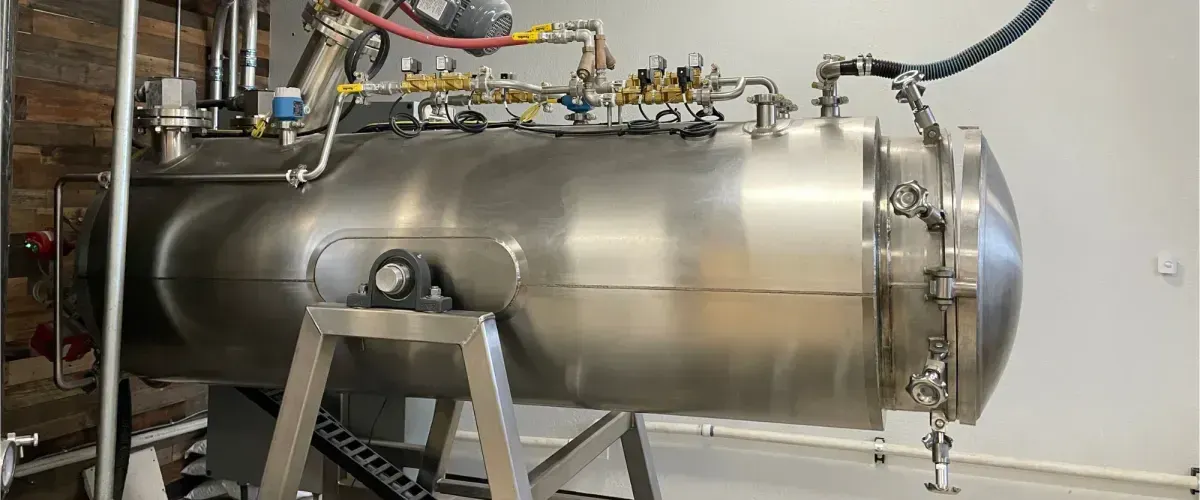
Green cremation most often refers to alkaline hydrolysis, a water-based process also called water cremation, aquamation, or resomation. It uses water, alkaline chemicals, and heat instead of flame to reduce a body to bone, and it carries roughly one-tenth the carbon footprint of conventional flame cremation, according to National Geographic. The term is sometimes also applied to reduced-emission flame cremation, but in most conversations, "green cremation" means the water-based method.
If you are weighing end-of-life options and want something that fits an environmental conscience, this article explains what green cremation is, what it costs, where it is legal, how it compares to traditional flame cremation and green burial, and what remains a family receives at the end.
What is green cremation?
Green cremation is a name for alkaline hydrolysis, a process that uses water and an alkaline solution rather than fire to break a body down to its mineral remains. According to the Cremation Association of North America (CANA), the body is placed in a sealed chamber holding roughly 100 gallons of a water-and-alkali solution, heated to temperatures between 199 and 302 degrees Fahrenheit, and left to run for three to sixteen hours depending on the equipment and body mass.
The process accelerates the same decomposition that happens naturally in soil, only faster and in a controlled chamber. When it finishes, two things are left: soft, porous bone fragments, and a sterile liquid. CANA notes the liquid byproduct contains salts, sugars, amino acids, and peptides, with no tissue or DNA remaining.
You will also hear green cremation called "flameless cremation," which is accurate: no flame is involved at any point. The bone that remains is then dried and processed into a fine powder, the same way flame cremation produces what most families recognize as cremated remains.
Is cremation eco-friendly? How traditional flame cremation affects the environment
Traditional flame cremation has a real environmental cost, which is the reason greener alternatives exist. To reduce a body to bone, a flame cremation chamber heats to 1,200 degrees Fahrenheit or higher, and each cremation emits roughly 534.6 pounds of carbon dioxide, according to an estimate from Matthews Environmental Solutions cited by National Geographic. Across the country, National Geographic reports that U.S. cremations release about 360,000 metric tons of carbon dioxide every year.
There is a second issue: mercury. Dental amalgam fillings are the primary source of mercury emitted during cremation, and amalgam is roughly 40 to 50 percent mercury by weight, according to the University of Minnesota's dental mercury research program. The same source cites an EPA estimate that U.S. crematoria released about 3,000 kilograms, or roughly 6,500 pounds, of mercury per year during the 2005 to 2010 period. As the cremation rate climbs, that figure is expected to rise with it.
That rate is climbing steadily. The National Funeral Directors Association projects the U.S. cremation rate at 63.4 percent in 2025, rising to 82.3 percent by 2045. More cremations mean the environmental footprint of the practice matters more, not less, which is why families increasingly ask whether a lower-impact version exists. If you want to understand the mechanics of the conventional method first, our guide to the cremation process walks through each step.
Meet Justin Crowe, founder of Parting Stone. After his grandfather passed away in 2014, Justin noticed something many families experience: the discomfort of living with cremated remains stored in closets, garages, or basements. That personal loss inspired him to create something different. Working with material scientists at Los Alamos National Laboratory, Justin developed a way to transform 100% of cremated remains into smooth, touchable stones that families can hold, share, and carry with them. Today, Parting Stone has served over 13,000 families who were ready for an alternative to traditional ashes.
How does green cremation compare to traditional cremation?
Green cremation vs traditional cremation comes down to energy, emissions, and what is left behind. Water cremation uses roughly 90 kilowatt-hours of electricity per body, about one-quarter the energy of flame-based cremation, according to figures compiled by Wikipedia's reference on the process. Because it does not burn anything, it produces no direct combustion emissions and does not vaporize mercury from dental fillings. National Geographic puts its overall carbon footprint at about one-tenth that of conventional cremation.
There is one practical difference families notice. CANA reports that alkaline hydrolysis yields roughly 32 percent more remains than flame cremation, because the gentler process leaves more of the bone intact rather than burning some of it away. The remains come out pure white in color, and a family may need a slightly larger container to hold them.
In every other respect, the outcome is familiar. You receive processed mineral remains you can keep, bury, scatter, or share among family members, exactly as you would with flame cremation. The decision affects how the remains are produced, not what a family is able to do with them afterward.
Where is green cremation legal?
Green cremation is not yet available everywhere. Alkaline hydrolysis is legal for human remains in 26 U.S. states as of March 2026, according to CANA, and the number has grown steadily as more legislatures pass enabling laws. The first single-cadaver human system was installed at the Mayo Clinic in 2005, and the practice has spread from there.
Availability is a separate question from legality. Even in states where the process is permitted, only a limited number of funeral providers own the equipment, so families in rural areas may need to travel or arrange transport. If you are considering green cremation, the practical first step is to confirm both that it is legal in your state and that a provider within reach actually offers it.
How much does green cremation cost?
Green cremation cost depends heavily on the provider and region, and because water cremation equipment is expensive and less common than flame equipment, the price a family pays is often comparable to or slightly higher than conventional cremation. For reference on the broader landscape, Britannica Money reports that cremation averaged about $6,280 in 2023, conventional burial averaged about $8,300, and green burial ranged roughly from $500 to $5,000 with an average near $2,600.
The underlying operating cost of the water cremation process itself is low. One figure compiled by Wikipedia's reference on alkaline hydrolysis puts the direct materials, maintenance, and labor cost at a little over $100, though that number excludes the large capital cost of the equipment, which is what drives the consumer price up. As with any burial or memorial expense, it is worth requesting an itemized price list from any provider before committing.
How does green cremation compare to green burial?
Green cremation is one eco-conscious option, and green burial is another, so it helps to understand both. According to the Green Burial Council, green burial is a natural approach to death care that avoids embalming and metal caskets, places the body in a biodegradable container such as a shroud or plant-based casket, and uses no concrete burial vault. The Council certifies three kinds of cemeteries for this: hybrid sections within conventional cemeteries, natural burial grounds set aside for the purpose, and conservation grounds tied to land preservation.
The environmental case for green burial is partly about what conventional burial consumes. Scientific American reports that U.S. conventional burials use roughly 30 million board feet of casket hardwood, 90,000 tons of steel, 1.6 million tons of concrete for vaults, and 800,000 gallons of embalming fluid each year. Green burial removes nearly all of that.
The core difference between the two options is what a family is left with. Green burial returns the body to the earth in one place, and there are no remains to take home. Green cremation, like flame cremation, produces mineral remains a family keeps. That distinction matters for anyone who wants something to hold onto after the service, and it leads to the question most articles on this subject leave unanswered.
What can families do with cremated remains after a green cremation?
Whether a family chooses flame cremation or green cremation, the result is the same in one important way: they receive cremated remains, and then they have to decide what to do with them. That decision is where many families feel stuck. The remains often sit in a temporary container on a shelf for months or years while a family waits to feel ready, unsure which option truly fits the person they lost.
There are many meaningful choices, and none is more correct than another. Some families scatter remains in a meaningful place. Some bury them or keep them in an urn at home. Some divide them so more than one person can keep a portion, and some choose cremation jewelry or other alternatives that keep a loved one close. Our overview of what to do with cremated remains lays out the range in one place.
One option worth knowing about is solidified remains. Parting Stone offers a patented process Parting Stone pioneered that gently transforms virtually all of a person's cremated remains into 40 to 80+ smooth, holdable stones. Instead of a container a family may find hard to look at, the remains become a set of stones they can hold in a hand, carry in a pocket, display at home, or share among relatives who each want to keep a part of someone close. For families drawn to an eco-conscious cremation because they wanted something more natural and tactile, having a form they can actually hold often resonates for the same reasons. You can read more about what cremation stones are and how the process works.
The solidification service is $2,495 for a person's cremated remains, and fulfillment takes 8 to 10 weeks. It works with remains from flame cremation and water cremation alike. There is no rush to decide. When you are ready, in your own time, it is one option among several worth considering.
Frequently asked questions about green cremation
What is green cremation?
Green cremation is another name for alkaline hydrolysis, a water-based process also called water cremation, aquamation, or resomation. According to CANA, it uses water, an alkaline solution, and heat instead of flame to reduce a body to bone, then processes the bone into mineral remains a family keeps.
Is green cremation better for the environment than traditional cremation?
Green cremation has a lower environmental footprint than flame cremation. National Geographic reports it carries roughly one-tenth the carbon footprint of conventional cremation, and it uses about one-quarter the energy while producing no direct combustion emissions and no mercury vapor from dental fillings.
How much does green cremation cost?
Green cremation cost varies by provider and region and is often comparable to or slightly higher than flame cremation, in part because the equipment is expensive and less common. For context, Britannica Money reports cremation averaged about $6,280 in 2023. Always request an itemized price list from a provider.
Where is green cremation legal?
Alkaline hydrolysis is legal for human remains in 26 U.S. states as of March 2026, according to CANA, with more states adding it over time. Because relatively few providers own the equipment, families should confirm both legality and local availability.
What remains does a family receive after a green cremation?
A family receives soft white bone fragments that are dried and processed into fine mineral remains, similar to flame cremation. CANA notes the process yields roughly 32 percent more remains than flame cremation, so a slightly larger container may be needed.
What is the difference between green cremation and green burial?
Green cremation produces mineral remains a family keeps, while green burial returns the body directly to the earth in a biodegradable container with no remains to take home. Both are eco-conscious options; the right one depends on whether a family wants something to keep.
Can cremated remains from a green cremation be turned into stones?
Yes. Solidified remains work with cremated remains from both flame cremation and water cremation. Parting Stone uses a patented process it pioneered to transform virtually all of a person's cremated remains into 40 to 80+ smooth, holdable stones, with fulfillment in 8 to 10 weeks.